
School & District Management

Survey Shows Nearly All States Can Track Data on Students

Survey finds better use by policymakers
By Sarah D. Sparks — December 01, 2011 3 min read
  • Save to favorites
  • Print

Includes updates and/or revisions.

Nearly all states now have comprehensive data systems that allow them to track students’ academic careers over time, and state officials are starting to dig into using the mountains of information, according to the sixth annual national survey on the subject.

The Data Quality Campaign, a Washington-based nonprofit group that promotes data use in education, released the report last week. For the first time, the survey focused on governors’ perspectives on state longitudinal-data systems, as opposed to the systems’ technical capacity.

“Leadership is critical,” said Aimee R. Guidera, the executive director of the campaign, noting that in the past year, Idaho and Maryland “leapfrogged many states that had been building along slowly,” thanks to statewide data-use programs launched by Idaho schools Superintendent Tom Luna and Maryland Gov. Martin J. O’Malley.

“There’s been incredible progress this year in states’ ability to provide access to stakeholders, including teachers and principals and parents,” Ms. Guidera said, though she added that no state has enacted all of the DQC’s recommended state policies to support data use.

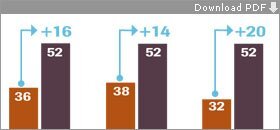
Essential Elements

Most states have made progress over the past six years in creating student-data systems with the elements that the Data Quality Campaign considers to be “essential.”
BRIC ARCHIVE

Note: The data include the 50 states plus the District of Columbia and Puerto Rico.
SOURCE: Data Quality Campaign

“We really think the next several years need to be spent on the toughest issues in [data use], around turf, trust, technical issues, and time,” she said in an interview. “This is much knottier and hard to solve, because it deals with changing behavior. It’s much easier to build a data system that collects information.”

Infrastructure Complete

The 2011 survey finds states have basically completed that first phase of developing data infrastructure.

This will be the last year that the DQC will track states’ progress in what it considers the 10 “essential elements” of student data systems because, as the report concludes, “without exception, every state in the country has robust longitudinal data that extend beyond test scores and could inform today’s toughest education decisions.”

Nearly all states now have a unique identification code for each student. They also have student-level enrollment, demographic, and program data, as well as high school graduation data, college-readiness-test results, and the ability to match P-12 and postsecondary student records. All or nearly all states also can track academic growth from year to year using students’ test scores, provide information on students who are not tested, and audit their data for quality and reliability.

However, only 41 states and territories track individual students’ transcript data. Those that cannot are: Alaska, Arizona, Colorado, Connecticut, Maine, Montana, New Jersey, Oklahoma, Pennsylvania, Rhode Island, and Vermont. Moreover, the District of Columbia and seven states—Alaska, Colorado, Connecticut, Montana, New Jersey, South Dakota, and Vermont—still cannot match teachers to their students. That data element is considered critical for developing test-based teacher-evaluation systems, the report notes.

The DQC found 39 states now regularly train active teachers and principals to understand and use longitudinal data to improve instruction. But fewer than a third as many states require preservice teachers to demonstrate data literacy in order to obtain certification or licensure, and only six states use data to provide feedback to teacher education programs.

“One of the lessons learned from 10 essential elements is to really push [education] leaders on quality,” said Paige Kowalski, the director of state policy initiatives for the DQC. “You can’t just check the box and move on. States may be providing access to data for teachers, but are they really providing timely, actionable, user-friendly data?”

During the next several weeks, the DQC intends to release four more in-depth studies of how states use longitudinal student data to inform education policy in four areas: teacher effectiveness, parent engagement, high school early-warning systems, and college and career readiness. The group will also hold a national data “summit” with U.S. Secretary of Education Arne Duncan in Washington on Jan. 18.

A version of this article appeared in the December 07, 2011 edition of Education Week as Milestone Reached: Most States Gather Data on Students

Events

This content is provided by our sponsor. It is not written by and does not necessarily reflect the views of Education Week's editorial staff.
Sponsor
Artificial Intelligence Webinar
AI in Schools: What 1,000 Districts Reveal About Readiness and Risk
Move beyond “ban vs. embrace” with real-world AI data and practical guidance for a balanced, responsible district policy.
Content provided by Securly
This content is provided by our sponsor. It is not written by and does not necessarily reflect the views of Education Week's editorial staff.
Sponsor
Recruitment & Retention Webinar
K-12 Lens 2026: What New Staffing Data Reveals About District Operations
Explore national survey findings and hear how districts are navigating staffing changes that affect daily operations, workload, and planning.
Content provided by Frontline Education
Education Funding Webinar Congress Approved Next Year’s Federal School Funding. What’s Next?
Congress passed the budget, but uncertainty remains. Experts explain what districts should expect from federal education policy next.

EdWeek Top School Jobs

Teacher Jobs
Search over ten thousand teaching jobs nationwide — elementary, middle, high school and more.
View Jobs
Principal Jobs
Find hundreds of jobs for principals, assistant principals, and other school leadership roles.
View Jobs
Administrator Jobs
Over a thousand district-level jobs: superintendents, directors, more.
View Jobs
Support Staff Jobs
Search thousands of jobs, from paraprofessionals to counselors and more.
View Jobs

Read Next

School & District Management How Top Principals Are Improving Schools Across the Country
Principals must empower student and teacher voices.
7 min read
Successful male and female in leadership achieve target. Embracing success confidence holding winner flag on top of mountain peak.
Education Week + iStock/Getty
School & District Management The School Role Helping Prevent Misbehavior Before It Starts
Experienced teachers can spot signs of trouble in students early in the school day.
7 min read
Students eat breakfast and color in Topaz Stotts' second-grade classroom before school starts at Klatt Elementary School in Anchorage, Aug. 17, 2021. Debate over school funding is dominating the Alaska Legislature as districts face teacher shortages and in some cases multimillion-dollar deficits. Schools have cut programs, increased class sizes or had teachers and administrators take on extra roles. (Emily Mesner/Anchorage Daily News via AP, File)
Students eat breakfast and color before the start of the school day in a second grade classroom at Klatt Elementary School in Anchorage, Alaska, on Aug. 17, 2021. Some districts around the country are turning to behavior tutors and similar staff roles to help address student behavior challenges and support teachers.
Emily Mesner/Anchorage Daily News via AP
School & District Management Opinion 6 Years Ago, Schools Closed for COVID. Have We Learned the Right Lessons?
A school administrator outlines four priorities to guide true recovery from the pandemic.
Robert Sokolowski
5 min read
FILE - In this Aug. 26, 2020, file photo, Los Angeles Unified School District students stand in a hallway socially distance during a lunch break at Boys & Girls Club of Hollywood in Los Angeles. California Gov. Gavin Newsom is encouraging schools to resume in-person education next year. He wants to start with the youngest students, and is promising $2 billion in state aid to promote coronavirus testing, increased ventilation of classrooms and personal protective equipment.
Los Angeles public school students maintain social distance in a hallway during a lunch break in 2020.
Jae C. Hong/AP
School & District Management How Assistant Principals Build Stronger School Communities
From middle to high school, assistant principals share what they've done to increase engagement and better student behavior.
7 min read
Image of a school hallway with students moving.
iStock/Getty
