Iowa appears to be poised to consider a pay-for-performance compensation plan for teachers, following the lead of a handful of districts and schools that have embraced the controversial policy.
Task forces made up of teachers, administrators, union leaders, and state officials there have proposed a plan that would reward Iowa educators for their performance in the classroom rather than the number of years spent teaching. Though no legislation has been introduced yet, educators expect the plan—or something similar to it—to surface in the upcoming legislative session, which begins this month.
“More and more states are seeing that there’s a whole series of policies that could focus on teacher quality, from perfecting the licensing system to standards-based evaluation to compensation to professional development,” said Allan Odden, the University of Wisconsin-Madison education professor who is acting as a consultant in Iowa and has helped structure performance-pay programs elsewhere. “If you do one [policy] and not the other, you’d be missing out.”
‘Return on Investment’
Currently, only a small number of districts and public schools have adopted pay- for-performance models. Administrators and the teachers’ union in Cincinnati agreed last May to put such a plan in place, making the 44,000-student district the first in the country to toss out its uniform pay scale since 1921. A voluntary pay-for-performance system has been up and running in Douglas County, Colo., since the early 1990s, and Denver launched a pilot program in 1999.
Proponents of such plans say they create career incentives similar to those in business and provide opportunities for outstanding educators to shine. They also attract motivated young men and women who want to teach but fear they won’t make a decent salary until their golden years, supporters add.
Critics, however, contend that policies hinging on teacher evaluations, as in the Cincinnati model, can be subjective and tainted by favoritism and can also divide faculty members who receive unequal salaries. And they argue that models like those in Denver, which tie teachers’ paychecks to student performance, are unfair because students come to teachers from varying backgrounds and with differing skill levels.
“It is a horrible system,” said Katherine Boles, an associate professor of education at Harvard University’s graduate school of education who has studied such plans. When performance systems are based on student testing, “you wind up pushing kids out of regular classrooms into special education because ... low-performing kids bring test scores down,” Ms. Boles said. “Kids classified as special education don’t get factored into the system.”
Nevertheless, the people advocating the pay-for-performance system in Iowa say they are desperate for change due to a teacher shortage and declining student test scores.

|
“Within the next five years or so, the one thing that will have the greatest return on investment is improving teaching skills,” said Ted Stilwill, the director of the state education department. “If you change the compensation system to create a much stronger emphasis on continuing-education strategies, you’ll do that.”
The task forces, which met separately but issued a single recommendation, urged state policymakers to drop the current tenure system and replace it with one that would set five levels of teacher achievement. Educators could move up through the levels at their own pace by proving their worth in the classroom.
Although minimum standards of good teaching would be established at the state level, Iowa school districts would conduct evaluations. The recommendation further suggests that three assessments be used in that process, but does not prescribe what those methods would be.
In an attempt to make Iowa’s pay more competitive, the salary schedule would be based on national compensation averages, Mr. Stilwill said. A beginning teacher would make a minimum of $29,700—slightly below the national average, according to U.S. Department of Education statistics. An educator at the top of the salary schedule would earn a minimum of nearly $54,000—above the national average.
Teachers and administrators would get bonuses based on their salaries if their schools’ students improved on standardized tests.
In another aspect of the plan, the teacher induction system would be overhauled and include mentoring for beginners.
While most districts need to improve and even redesign their teacher evaluation systems, Ms. Boles said, tying pay to student performance is risky.
Not only would educators under such a plan feel pressure to push students into special education, eliminating them from testing pools, Ms. Boles contended, but some also would manipulate the system to ensure they were assigned the best students.
Mr. Stilwill, the Iowa schools chief, said he was aware of such criticisms. Still, he hopes that by recommending the use of three assessments, there would be less pressure to rely on standardized- test results.
Widespread Support
Such a measure appears to have bipartisan support as well as the backing of leading education groups in Iowa.
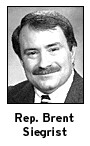
“There really is widespread support,” asserted Speaker of the House Brent Siegrist, a Republican and a former teacher.
|
“We’d love to be the first state to overhaul the compensation system.”
Gov. Tom Vilsack, a Democrat, has made the effort “his top priority,” said Kristin Mackey, a spokeswoman.
Moreover, leaders from both the Iowa State Education Association, an affiliate of the National Education Association, and the Iowa Association of School Boards are backing the recommendation.
“The average teacher pay [in Iowa] is so far below the national average, we’re willing to look at all proposals that will pay a professional wage,” said Jan Reinicke, the executive director of the teachers’ union.
Ms. Reinicke said she would have reservations about any pay-for-performance model that provided opportunities for only a few teachers, rather than all teachers. She also expressed concern that districts would lack the capacity to handle all the training needed to assess teachers accurately.
Persuading the legislature to spend the money for the plan could be the toughest sell. The program would cost between $250 million and $300 million to implement over the next four or five years, Mr. Stilwill said.
“State revenue is not growing, because the population is not growing,” said Margaret Buckton, the school boards association’s government-relations director. “We’ll have to make it a priority to pay for it.”


