Remedial courses are disappearing from the catalogs of public four-year colleges and universities as state lawmakers search for ways to slash spending on what they perceive to be duplicate services.
High school students who graduate without having mastered needed skills should retake basic-skills courses at two-year institutions rather than rely on learning the material after arriving at a four-year college, the lawmakers argue. The two-year schools have more extensive support services and specially trained instructors, they say, and can get students up to speed for less money.
|
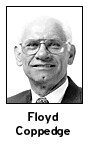
“There is absolutely no reason for Oklahomans to experience double costs for providing the same level of education in high school and at the college level,” said Oklahoma Secretary of Education Floyd Coppedge, who, along with Gov. Frank Keating, is advocating a policy to scrap remedial programs at the state’s four-year colleges. “We now spend $21 million a year on remediation. We’ll cut that by at least 50 percent.”
More than 30 states have proposed similar policies since the mid-1980’s, said Hunter R. Boylan, the director of the National Center for Developmental Research Education at Appalachian State University in Boone, N.C. Seven states have passed laws reducing or eliminating remedial programs at four-year colleges.
Critics of the alternative remedial programs in two-year colleges, however, deem them a quick fix and maintain that the problems that truly need attention are the substandard teaching at many K- 12 schools and the disconnection between high school and college standards.
“Many students are totally undone by the gaps between high school and college,” said Jeanne Brennan, a spokeswoman for the Education Trust, a Washington-based organization that promotes high achievement for all students. “They are doing everything their high schools tell them they need to do to get a diploma, but when they show up even at community colleges, they don’t have the knowledge and skills necessary to be in credit-bearing classes.”
Moreover, researchers point to studies showing that those who attend two-year institutions—often, poor and minority students—are less likely to continue at four-year colleges once they’ve earned their associate’s degrees. Such graduates, they say, are likely to miss out on the future earnings that typically go with having a bachelor’s degree, which also means a reduced economic benefit for the nation.
Needs Vary Widely
The demand for remedial classes for incoming college students is great. Nearly one-third of all college freshmen had to take at least one remedial class in reading, writing, or mathematics in 1995, according to a recent study by the Education Trust and the National Association of System Heads. Their needs vary: While some students must simply brush up on geometry, others can barely read English. (“Mismatched Curricula Leave Freshmen Ill-Prepared, Study Finds,” Dec. 15, 1999.)
Remediation gained national attention when trustees of the City University of New York, the nation’s largest urban university, voted in June 1998 to phase out remedial classes and end open enrollment—the policy of accepting any student who applied, regardless of his or her academic background—in the system’s 11 four-year colleges. Approximately 350,000 students are enrolled at CUNY’s campuses, and half the freshmen in every incoming class do not speak English as their first language, said Rita Rodin, a spokeswoman for the university system.
The phase-out of remedial programs, which took effect at four of CUNY’s 11 senior colleges this past January, redirects students who do not pass basic-skills tests to CUNY two-year colleges, Ms. Rodin said. The other senior colleges will phase out remedial programs in September of this year and next.
Meanwhile, three remedial programs are in place for incoming students who fail the tests, Ms. Rodin said. Depending on students’ performance in the various programs and placement on subsequent assessments, individuals are either admitted to four-year institutions or placed in community colleges. Students who fail the tests by only a few points will be able to take basic-skills classes administered by the two-year schools but housed on the campuses of the four-year colleges.
CUNY administrators say they haven’t yet analyzed changes in enrollment since the new policy has been implemented. But critics of the CUNY plan say they are worried that access to four-year colleges will effectively be denied to minority and economically disadvantaged students, who tend to graduate from poor-quality high schools and often need remedial classes.
Unlike four-year institutions, most two-year schools don’t create supportive cultures for learning, Mr. Boylan maintained. Even if students achieve academically, they are often without friends or mentors, he said, and become discouraged about continuing in higher education.
Linking K-12 to College
Educators agree that the ideal solution is to ensure that no student graduates from high school in need of remedial study.
That goal can be accomplished by hiring capable precollegiate teachers who know what skills colleges expect their students to have mastered before applying for admission and who teach that material, said Esther M. Rodriguez, the associate executive director of the State Higher Education Executive Officers, a membership organization in Denver.
But prospective teachers are often inadequately trained by their colleges and universities, said Sylvia Seidel, the director of the National Education Association’s Teacher Education Initiative, which deals with professional development.
Policymakers in Maryland, Massachusetts, and Missouri are working to bridge the worlds of precollegiate and higher education by following high school graduates during their college careers. Detailed grade reports are shipped back to students’ school districts so that K-12 administrators know where learning deficiencies lie.
Maryland’s system, in place since the 1991-92 school year, has proven that students who have followed a college-preparatory curriculum perform better in college, said Michael J. Keller, the director of policy analysis and research for the Maryland Higher Education Commission.


