Reading & Literacy

Reading Is Fundamental Tackles Achievement Gap

By Kathleen Kennedy Manzo — June 19, 2007 1 min read
  • Save to favorites
  • Print

A prominent literacy organization is launching a campaign to tackle the achievement gap between minority youngsters and their white peers through workshops, an interactive Web site, and collections of children’s books that reflect diverse backgrounds.

Through its Multicultural Literacy Campaign, unveiled June 13, the Washington-based Reading Is Fundamental, or RIF, is offering literacy training for parents and caregivers and instructional resources for preschool children. The organization’s Web site, www.rif.org, includes free literacy resources, such as stories, nursery rhymes, and other activities to help parents build skills in their children that are considered precursors to reading.

RIF will donate collections of 250 books to kindergarten classrooms in low-income areas. The books include those with themes related to African-American, Hispanic, Asian, and Native American children, and some written in Spanish and other languages.
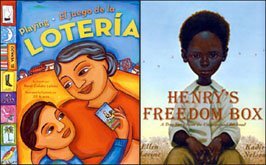
MULTICULTURAL LITERACY: Children will be able to read about the Underground Railroad and play a bingo-like game, along with a host of themes related to ethnic cultures as part of a new literacy campaign aimed at reducing the achievement gap.

“As a country, we cannot let so many students fall behind,” Claude Mayberry Jr., the founder and chief executive officer of Science Weekly and the chairman of the RIF Multicultural Advisory Board, said in a statement. “This RIF campaign is the start of a renewed effort to engage parents, caregivers, community organizations, educators, and corporations in a comprehensive approach to improving literacy outcomes among African-American, Hispanic, and Native American communities.”

The campaign is financed through federal grants and corporate donations. RIF will work with the National Black Child Development Institute, also based in Washington, to conduct training sessions for child-care providers who work with African-American children from low-income families.

See Also

For background, previous stories, and Web links, see Reading.
A version of this article appeared in the June 20, 2007 edition of Education Week

Events

Jobs Regional K-12 Virtual Career Fair: DMV
Find teaching jobs and K-12 education jubs at the EdWeek Top School Jobs virtual career fair.
This content is provided by our sponsor. It is not written by and does not necessarily reflect the views of Education Week's editorial staff.
Sponsor
Artificial Intelligence Webinar
Making AI Work in Schools: From Experimentation to Purposeful Practice
AI use is expanding in schools. Learn how district leaders can move from experimentation to coordinated, systemwide impact.
Content provided by Frontline Education
This content is provided by our sponsor. It is not written by and does not necessarily reflect the views of Education Week's editorial staff.
Sponsor
Student Well-Being & Movement Webinar
Building Resilient Students: Leadership Beyond the Classroom
How can schools build resilient, confident students? Join education leaders to explore new strategies for leadership and well-being.
Content provided by IMG Academy

EdWeek Top School Jobs

Teacher Jobs
Search over ten thousand teaching jobs nationwide — elementary, middle, high school and more.
View Jobs
Principal Jobs
Find hundreds of jobs for principals, assistant principals, and other school leadership roles.
View Jobs
Administrator Jobs
Over a thousand district-level jobs: superintendents, directors, more.
View Jobs
Support Staff Jobs
Search thousands of jobs, from paraprofessionals to counselors and more.
View Jobs

Read Next

Reading & Literacy Quiz Quiz Yourself: How Much Do You Know About Helping Struggling Students Get Back on Track?
Too many students struggle with reading. Test your knowledge of what works—and discover strategies to help them get back on track.
Reading & Literacy How a School's Language Lab Teaches Non-Phonics Reading Skills
In 'language lab,' teachers work on vocabulary and syntax to help students understand complex text.
5 min read
5th grade classroom in February. A morpheme word sort, sentence combining practice, and syntax surgery.
In a 5th grade classroom at Rock Rest Elementary, near Charlotte, N.C., students practice combining sentences and participate in "syntax surgery" to order the parts of complex sentence.<br/>
Madison Hart, Rock Rest Elementary
Reading & Literacy Quiz Risk vs. Reward: How Defensible Is Your Literacy Strategy?
Build a stronger case for your literacy approach. Test your knowledge of research-driven strategies that support reading success with this quick quiz.
Reading & Literacy Opinion What the 'Science of Reading' Movement Has Meant for English Learners
We should think of reading instruction for multilingual learners as a bridge, not a checklist.
8 min read
Conceptual illustration of classroom conversations and fragmented education elements coming together to form a cohesive picture of a book of classroom knowledge.
Sonia Pulido for Education Week
