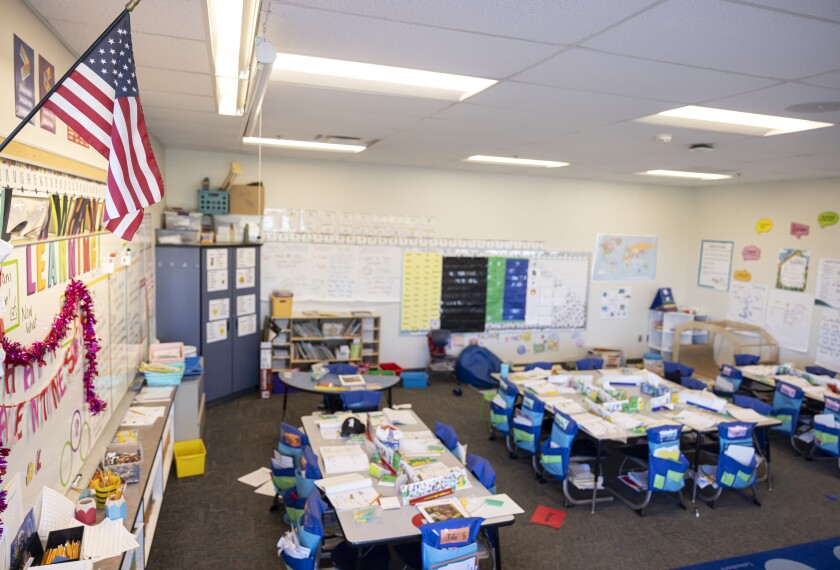
Nestled in America’s Heartland is a public school where two of our nation’s most defining mottos, “the land of the free and the home of the brave” and “the land of opportunity” intersect every day for military-connected students. At Knob Noster public schools in Missouri, where I serve as the superintendent, we keep these guiding principles front of mind as we educate the 1,500 children who attend our district—1,000 of whom have parents who serve in the U.S. armed forces at Whiteman Air Force Base. We are proud of our work to support these students and their parents, who are engaged partners in their children’s education.
Knob Noster is one of more than 1,200 public school districts around the country that relies on Impact Aid—an annual federal appropriation that provides a tax reimbursement to school districts that serve “federally connected” children. This funding is available to schools with children who live on military bases, Native American reservations, or other federal properties. Even though financing education is primarily the responsibility of state and local governments, for federally impacted schools, Impact Aid serves the dual purpose of educational equity and taxpayer-relief fairness. It is also the law under the Every Student Succeeds Act.

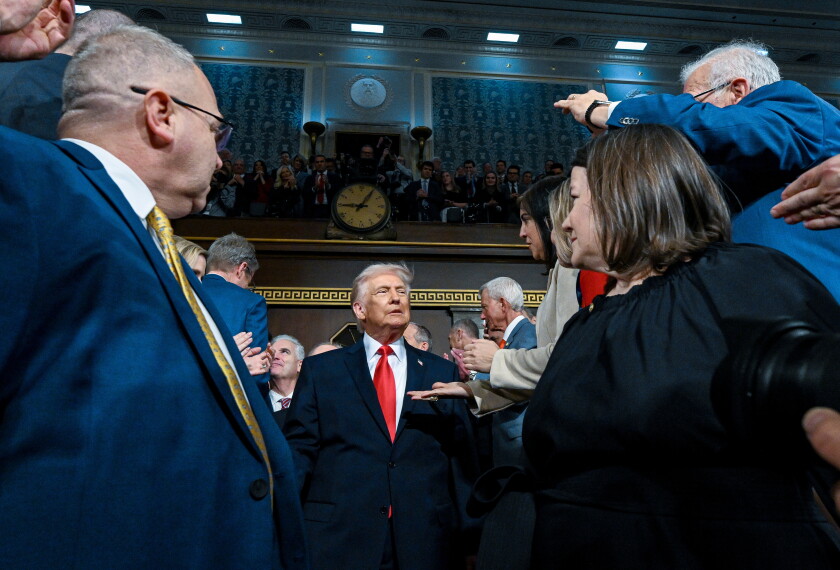
President Donald Trump stayed true to his pro-military position when he transmitted the 2019 budget request in mid-February to Congress and included $1.26 billion for Impact Aid funding that provides support for “federally connected” students. The president’s budget, however, eliminated $69 million from Impact Aid that supports school districts that have a large percentage of federal property, even as it asked for a new $1 billion school choice initiative. The budget request is now in the hands of Congress, where Impact Aid has consistently earned broad bipartisan support since it was established in 1950.
In Knob Noster schools, we specialize in supporting military-connected children and their families by striving to mitigate the challenges they face because of deployments and mobility. In partnership with the national Military Interstate Children’s Compact Commission, which offers states support for academic transition issues, we make every effort to ensure credits transfer across state boundaries and that students graduate regardless of how many schools they have attended. We also work closely with parents, school liaison officers, and garrison commanders to ensure our military students receive a quality education that meets their individual needs.
Some of the Knob Noster programming made possible by Impact Aid includes:
• Character recognition: Our Recognizing Our Character Kids program annually acknowledges more than 400 students for demonstrating quality character, citizenship, and patriotism as young Americans. Impact Aid makes this happen.
Impact Aid serves the dual purpose of education equity and taxpayer-relief fairness."
• High expectations: An Advanced Placement program offers more than a dozen courses in STEM—science, technology, engineering, and math—subjects. Knob Noster students increased AP qualifying scores 600 percent from 2015 to 2017. Impact Aid makes this happen.
• Student mentoring: Each year, Knob Noster’s K-12 students welcome more than 250 military-transitioning students, making sure they feel comfortable, befriended, and integrated as soon as possible in their new school setting. Impact Aid makes this happen.
• Robotics: In its inaugural 2017 year, our robotics team qualified for the state and world championships in the international FIRST Robotics Competition, earning Rookie Team of the Year honors. Impact Aid makes this happen.
• Academic excellence: In 2016 and 2017, our school district bested its record on the Missouri state Annual Performance Report—a comprehensive measure of academic and college-and-career readiness. This made Knob Noster the highest performing school district in central Missouri for two straight years. Impact Aid makes this happen.
Impact Aid is the lifeline to performance for Knob Noster public schools, not just because it provides opportunities like the ones above, but also because it is a successful, flexible, and locally controlled program that works. Consider the following real scenario: In Knob Noster, two out of every three students are military-connected, with many of their families maintaining residence in other states. This makes it almost impossible for the district to raise the money it needs for school construction. Thankfully, our Impact Aid appropriation helps ease this tax burden.
Proposals to divert Impact Aid from schools, including the Heritage Foundation think tank’s pitch to turn it into an Education Savings Account program, are shortsighted. That will only reduce opportunities for a high-quality, 21st-century education for our military-connected students and others in these districts. The federal government should meet its responsibility and fully fund Impact Aid.
Every administrator, teacher, and professional on our campus takes seriously our role in educating these children and strives to meet their academic and social-emotional needs. While our service men and women defend our country, the last thing on their minds should be whether or not their children are receiving the best possible education at home.