Federal

How Would Typical Teachers Fare Under the GOP’s Tax Bill?

By Andrew Ujifusa — November 07, 2017 3 min read
  • Save to favorites
  • Print

Republican lawmakers’ proposed changes to the federal tax code are causing a stir in the education community. Teachers and others are zeroing in on the bill’s repeal of the $250 tax deduction teachers and principals can take for spending their own money on classroom supplies. But, aside from that, how could the bill impact an individual teacher’s tax bill?

Let’s examine how a couple of hypothetical teachers would fare under the legislation introduced in the U.S. House of Representatives last week and try to tease out an answer.

The following scenarios are in a world where the GOP tax bill is approved as released. Will it pass? Will lawmakers amend it? If so, how? Nobody knows the answers to those questions. Right now, House lawmakers are vigorously debating it. But let’s figure things out based on what we know is in the bill.
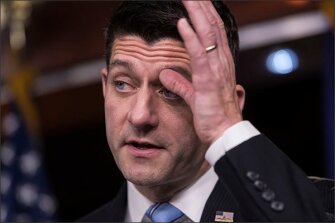
Speaker of the House Paul Ryan, R-Wis., defends the GOP tax reform plan during a news conference on Nov. 7 in Washington.

For this analysis, we’re leaving out a lot of factors that could affect these hypothetical teachers’ taxes. We’ve also tried to keep it relatively simple, in order to get a basic idea of how the proposed tax changes could work for many teachers.

The Average Teacher

We reported in August that the average public school teacher makes a base salary of $55,100 annually, and that this average teacher works 53 hours a week and has 14 years of teaching experience, according to the U.S. Department of Education’s School and Staffing Survey.

The Joint Committee on Taxation in Congress reported last week that under the GOP legislation, the average tax rate for individuals—not specifically teachers—making between $50,000 and $75,000 annually would on average fall from 14.8 percent to 13.6 percent in 2019. That means a $660 tax cut on average for that teacher, from $8,154 to $7,494. However, by 2027, the average tax rate would rise under the tax proposal to 14 percent for individuals in that income bracket. That would leave the average teacher with a $275 tax cut in 2027, compared to 2017.

Here’s another, somewhat broader view: The Institute on Taxation and Economic Policy, a nonprofit research group that’s independent from Congress, reported that in 2018, under the GOP tax proposal, 87 percent of households making between $40,750 and $65,150 annually—a range that includes the average teacher in terms of salary—would get a tax cut, and that the average tax cut would be $930. Meanwhile, 8 percent of taxpayers in that income range would see an increase, with the average tax increase totaling $810.

However, in the list of factors the Institute on Taxation and Economic Policy used to reach its conclusion, the repeal of the $250 deduction for classroom expenses is not included. That repeal would be a relatively small change to the tax code, but it’s the one that deals with teachers’ taxes in the most direct way.

The First-Year Teacher

As of 2012-13, the average salary for a first-year educator is $36,141 according to 2012-13 data from the National Education Association.

We don’t have a more recent national average than that. The average teacher’s salary went up by 3.7 percent from 2011-12 to 2015-16, so the average first-year teacher’s salary has likely gone up as well. But in terms of the tax bill’s impact on these new teachers, what’s important is that the average rookie teacher’s salary is still between $30,000 to $40,000, based on the Joint Tax Committee’s report. So let’s use the $36,141 figure for our calculations.

For those rookie teachers who are single, their average tax rate would fall from 7.9 to 7.2 percent. That would be an average tax cut of $253 for first-year teachers. However, by 2027, those teachers’ average rate would climb back to 7.6 percent. That would leave those teachers with an average tax cut of $109 in 2027, compared to 2017.

Again, those calculations assume the person is filing as an individual, as many first-year teachers are, and not jointly with a spouse.

Keep in mind that this bill still has a long way to go through the House and Senate.

Related Tags:

Assistant Editor Liana Heitin Loewus contributed to this article.

Events

This content is provided by our sponsor. It is not written by and does not necessarily reflect the views of Education Week's editorial staff.
Sponsor
Reading & Literacy Webinar
Unlocking Success for Struggling Adolescent Readers
The Science of Reading transformed K-3 literacy. Now it's time to extend that focus to students in grades 6 through 12.
Content provided by STARI
Jobs Regional K-12 Virtual Career Fair: DMV
Find teaching jobs and K-12 education jubs at the EdWeek Top School Jobs virtual career fair.
This content is provided by our sponsor. It is not written by and does not necessarily reflect the views of Education Week's editorial staff.
Sponsor
Professional Development Webinar
Mentorship That Matters: Strengthening Educator Growth & Retention
Learn how to design mentorship programs that go beyond onboarding to create meaningful professional growth opportunities.
Content provided by Frontline Education

EdWeek Top School Jobs

Teacher Jobs
Search over ten thousand teaching jobs nationwide — elementary, middle, high school and more.
View Jobs
Principal Jobs
Find hundreds of jobs for principals, assistant principals, and other school leadership roles.
View Jobs
Administrator Jobs
Over a thousand district-level jobs: superintendents, directors, more.
View Jobs
Support Staff Jobs
Search thousands of jobs, from paraprofessionals to counselors and more.
View Jobs

Read Next

Federal A Federal School Cellphone Policy? Big Barriers Stand in the Way
Other countries have nationwide restrictions, but in the U.S., states and districts have set the agenda.
6 min read
Students use their cellphones as they leave for the day the Ramon C. Cortines School of Visual and Performing Arts High School in downtown Los Angeles on Aug. 13, 2024.
Damian Dovarganes/AP
Federal Trump's Labor Secretary Leaves Cabinet After Abuse of Power Allegations
The department she led has been taking on day-to-day management of dozens of federal K-12 programs.
6 min read
Labor Secretary Lori Chavez-DeRemer speaks with a reporter at the White House, Friday, Sept. 5, 2025, in Washington.
Labor Secretary Lori Chavez-DeRemer speaks with a reporter at the White House, Friday, Sept. 5, 2025, in Washington. Chavez-DeRemer, whose department is in the process of taking over day-to-day management of dozens of federal education programs, resigned from her post on April 20, 2026, amid allegations that she abused her position's power.
Evan Vucci/AP
Federal Ed. Dept. Moves to Shutter Its Office for English Learners
Officials plan to move all federal English-learner programs and duties out of a standalone office.
6 min read
A photograph of a letter from the United States Department of Education dated February 13, 2026 stating that "This letter officially provides such notice of her proposal, including rationale, to redelegate OELA's programs and duties to other offices, thereby dissolving the need for a standalone OELA."
Gina Tomko/Education Week via Canva
Federal Trump Admin. Terminates Several Agreements to Protect Transgender Students
The Education Department terminated civil rights agreements under Title IX with five school districts and a college.
1 min read
AB Hernandez, a transgender student at Jurupa Valley High School, packs up her belongings under a canopy as athletes compete in the boys 4x800 meter relay at the California high school track-and-field championships in Clovis, Calif., Saturday, May 31, 2025.
AB Hernandez, a transgender student at Jurupa Valley High School, packs up her belongings under a canopy as athletes compete at the California high school track-and-field championships in Clovis, Calif., on May 31, 2025. The Trump administration said Monday it has terminated agreements previous administrations reached with five school districts and a college aimed to uphold rights and protections for transgender students.
Jae C. Hong/AP
