Federal

Get Away, Get Paid

By Hollice Fisher — February 26, 2007 3 min read
  • Save to favorites
  • Print

Science educator Miriam Sutton spent last summer researching the sea floor off Canada’s Labrador coast, attending a workshop at a marine field station in New Jersey, and studying oceanography at the U.S. Naval Academy. The best part: The 8th grade teacher from North Carolina received stipends for her journeys, and almost all of her expenses were covered.

Sound too good to be true? Opportunities for teachers to spend summers pursuing their passions are not as rare as one might think, according to Jill Frankfort, a former teacher who cataloged such programs in her new book, 100 Paid Adventures for Teachers. “If teachers are looking for a really extraordinary paid adventure, there’s a spot for them,” Frankfort says.
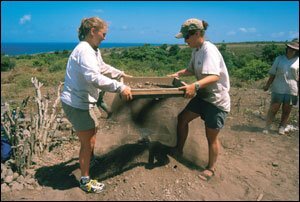
Earthwatch Institute fellows assist with conservation research in the West Indies.

The fellowships, workshops, travel tours, and other opportunities she outlines are designed to give teachers exciting experiences so they can bring new knowledge and enthusiasm back to their schools. Sutton, for example, applies what she learned to her class activities and inservice workshops, and she encourages her students to explore the world.

Some of the programs can also be substituted for traditional professional development courses. And, Frankfort adds, summer fellowships facilitate networking and brainstorming with like-minded teachers.

The former high school math teacher from Providence, Rhode Island, got the idea for her book as she researched possible getaways for the summer of 2004. She became frustrated by all the fliers advertising expensive professional development “adventures” she couldn’t afford. But as she began digging around, she was surprised by the number of paid opportunities out there. Rather than heading to a far-flung destination, Frankfort decided to spend the summer compiling her findings into a book. She first published it locally in 2005; when it sold out, she had the book distributed nationwide.
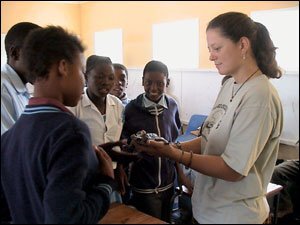
An Earthwatch fellow in Botswana.

For the more adventurous educator, Frankfort recommends the Earthwatch Institute’s Education Fellowship Program, which each year sends 200 teachers from 25 states on one- to three-week journeys to study specific conservation efforts. Upcoming expeditions will reach almost every corner of the globe, from the Amazon to remote Russian villages.

She also has good things to say about the Armada project, which gives teachers the opportunity to participate in oceanic, polar, and environmental research. The program, funded by the National Science Foundation, led Sutton’s voyage on the Labrador Sea.

One of the largest fellowship programs is run by the National Endowment for the Humanities, which pays teachers $1,800 to $4,200 to attend seminars taught by scholars across the United States and occasionally in other countries. This summer, some teachers will travel to Siena, Italy, to study Dante’s Commedia, and others will attend an institute on teaching jazz as American culture at Washington University in St. Louis, Missouri.
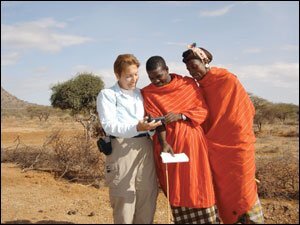
An Earthwatch fellow at work in Kenya.

Admission requirements vary, but longer programs and those that take teachers to sought-after destinations—especially Europe—can be quite competitive. Frankfort suggests gathering recommendations and drafting essays well before the application deadlines, which generally fall between December and March. Many organizations, she adds, may accept “slightly late” applications.

The strongest applications demonstrate an interest in venturing out and extending learning beyond classroom walls, says Sutton. She recommends starting with shorter journeys to gain experience before applying to longer (and more competitive) programs. She believes her participation in the one-week National Oceanic and Atmo-spheric Administration Teacher at Sea program in summer 2005 helped her win the monthlong Armada fellowship last year.

Sutton also advises teachers to outline their plans for incorporating what they learn into the classroom, and to not shy away from applying more than once. Some educators aren’t accepted until the second time around. Sutton herself has been rejected, but thinks the experience helped her learn about the application process.

More information can be found in Frankfort’s book, which details eligibility and application requirements, financial details, and professional development and graduate credit possibilities.

Related Tags:

A version of this article appeared in the March 01, 2007 edition of Teacher Magazine as Get Away, Get Paid

Events

Classroom Technology Live Online Discussion A Seat at the Table: The Rewiring of Childhood With Jonathan Haidt
Jonathan Haidt, Catherine Price, and Adam Swinyard join Peter DeWitt on how to get students off devices and back to the basics of childhood.
Professional Development K-12 Essentials Forum Getting Professional Development to Stick
Join this free virtual event to explore best practices, funding, format, and timing for teacher and principal PD.
This content is provided by our sponsor. It is not written by and does not necessarily reflect the views of Education Week's editorial staff.
Sponsor
College & Workforce Readiness Webinar
The Road to Opportunity: Making CTE Accessible for All
The most valuable CTE happens off campus. For too many students, transportation is the barrier that keeps opportunity out of reach.
Content provided by HopSkipDrive

EdWeek Top School Jobs

Teacher Jobs
Search over ten thousand teaching jobs nationwide — elementary, middle, high school and more.
View Jobs
Principal Jobs
Find hundreds of jobs for principals, assistant principals, and other school leadership roles.
View Jobs
Administrator Jobs
Over a thousand district-level jobs: superintendents, directors, more.
View Jobs
Support Staff Jobs
Search thousands of jobs, from paraprofessionals to counselors and more.
View Jobs

Read Next

Federal Trump's Justice Dept. Investigates Dozens of Districts Over LGBTQ+ Curricula
The investigations target how schools discuss sexuality and gender identity and whether parents can opt their children out of lessons.
8 min read
The U.S. Department of Justice is investigating how 43 school districts in three states teach about sexuality and gender identity and whether they give parents the opportunity to opt their children out of lessons that conflict with their religious beliefs on June 16, 2026.PICTURED, Protesters gather outside the Glendale Unified School District headquarters in Glendale, California, on June 20, 2023. Over 300 people gathered outside the Glendale Unified School District headquarters, as protests continued over the issue of teaching children about same-sex parents and queer issues.
Protesters gather outside the Glendale school district in Glendale, California, on June 20, 2023 over the issue of teaching children about same-sex parents and queer issues. The U.S. Department of Justice is now investigating three other school districts over LGBTQ+ themes in sex ed. and beyond. (The Glendale district is not one of them.)
DAVID SWANSON / AFP via Getty Images
Federal Education Department Moves Special Ed. and Civil Rights to Other Agencies
Special education programs help schools serve more than seven million K-12 students with disabilities nationwide.
9 min read
A banner featuring a photo of President Donald Trump hangs outside the Department of Justice in Washington on Monday, June 15, 2026.
A banner featuring a photo of President Donald Trump hangs outside the Department of Justice in Washington on Monday, June 15, 2026. The U.S. Department of Education is moving its office for civil rights to the Justice Department as part of a fresh wave of outsourcing.
Bill Clark/CQ Roll Call via AP
Federal Trump's Ed. Dept. Backs Away From Addressing Civil Rights for Black Students
Civil rights attorneys describe the administration’s actions as an inversion of legal history.
6 min read
Thomas Chalmers Public School sign is seen outside of school in Chicago, Wednesday, July 13, 2022. America's big cities are seeing their schools shrink, with more and more of their schools serving small numbers of students. Those small schools are expensive to run and often still can't offer everything students need (now more than ever), like nurses and music programs. Chicago and New York City are among the places that have spent COVID relief money to keep schools open, prioritizing stability for students and families. But that has come with tradeoffs. And as federal funds dry up and enrollment falls, it may not be enough to prevent districts from closing schools.
Children are seen outside the Thomas Chalmers Public School in Chicago on July 13, 2022. Under the Trump administration, efforts to address deep-rooted inequities for students of color are being cast as discriminatory against white students. The administration withheld more than $20 million from Chicago schools when the district refused to end its Black Student Success Program.
Nam Y. Huh/AP
Federal Interactive Feds Issue a Slimmed-Down Data Release on U.S. Schools
The Condition of Education highlights school enrollment, finance, and graduation data.
Image of blurry data and a school building.
Laura Baker/Education Week + Canva
