States

Contracts Heighten Chiefs’ Accountability

By Jessica L. Sandham — May 12, 1999 2 min read
  • Save to favorites
  • Print

In the midst of a school reform movement that is demanding results of its students, teachers, and principals, two recently appointed state schools chiefs are learning that accountability applies even to those at the top.

Glenn W.

Ohio Superintendent of Public Instruction Susan Tave Zelman and Illinois state Superintendent Glenn W. “Max” McGee--both hired within the past year--are working under performance-based contracts that demand progress in exchange for, respectively, salary bonuses and job renewal.

Performance-based contracts “are a must” when local superintendents and principals are responsible for student performance, said Louis Mervis, the chairman of the Illinois board of education. “We’ve got to make everybody in the food chain responsible for their section.”

State superintendents in 14 states are held directly accountable to the public because they are popularly elected, and the chiefs in 10 states are appointed and held accountable by governors.
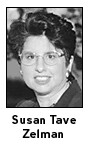
Susan Tave Zelman

But for the schools chiefs in the 26 states that are appointed by state boards of education, performance-based contracts seem a natural fit, said Gordon M. Ambach, the executive director of the Washington-based Council of Chief State School Officers.

“I expect we’ll see more of it,” Mr. Ambach said.

Clear Expectations

In Illinois last October, state board members agreed on a three-year contract that is renewable only if Mr. McGee meets certain criteria, including making continuous improvement in student performance statewide, providing solid service to districts, and working with schools of education to improve teacher training.

Unlike contracts with past state superintendents, the board’s expectations for Mr. McGee are written into the contract and are not negotiable at the end of one year, Mr. Mervis said. When salary and retirement benefits are combined, Mr. McGee--who started his new job in January--will receive $205,000 a year over three years. (“Ill. Board Names McGee State Schools Chief,” Nov. 4, 1998.)

With former Superintendent Joseph A. Spagnolo Jr., who resigned from office last summer amid a swirl of controversy, “we had a superintendent that didn’t meet our expectations,” Mr. Mervis said. “You can’t ask specific districts to perform and not hold your own person accountable. Otherwise, you give everybody an out.”

For Ms. Zelman, who started her tenure as the state superintendent in Ohio in March, the decision to include a performance-based provision in her contract was her own.

Before she left her previous position as deputy schools chief in Missouri, Ms. Zelman said she was trying to get performance-based contracts in place.

Now, in Ohio, Ms. Zelman’s contract guarantees her a base salary of $135,000, with a $15,000 bonus contingent on her ability to meet specified goals, including building solid relationships with lawmakers and the business community and establishing a long-term plan for the education department and long-term goals for Ohio schools.

“Ultimately, if they keep me around for a while, I can affect student performance,” Ms. Zelman said. “It’s important for a state superintendent to walk the talk.”

Related Tags:

A version of this article appeared in the May 12, 1999 edition of Education Week as Contracts Heighten Chiefs’ Accountability

Events

This content is provided by our sponsor. It is not written by and does not necessarily reflect the views of Education Week's editorial staff.
Sponsor
Reading & Literacy Webinar
Unlocking Success for Struggling Adolescent Readers
The Science of Reading transformed K-3 literacy. Now it's time to extend that focus to students in grades 6 through 12.
Content provided by STARI
Jobs Virtual Career Fair for Teachers and K-12 Staff
Find teaching jobs and K-12 education jubs at the EdWeek Top School Jobs virtual career fair.
This content is provided by our sponsor. It is not written by and does not necessarily reflect the views of Education Week's editorial staff.
Sponsor
College & Workforce Readiness Webinar
Portrait of a Learner: From Vision to Districtwide Practice
Learn how one district turned Portrait of a Learner into an aligned, systemwide practice that sticks.
Content provided by Otus

EdWeek Top School Jobs

Teacher Jobs
Search over ten thousand teaching jobs nationwide — elementary, middle, high school and more.
View Jobs
Principal Jobs
Find hundreds of jobs for principals, assistant principals, and other school leadership roles.
View Jobs
Administrator Jobs
Over a thousand district-level jobs: superintendents, directors, more.
View Jobs
Support Staff Jobs
Search thousands of jobs, from paraprofessionals to counselors and more.
View Jobs

Read Next

States Texas Gov. Abbott Wants 'Disciplinary Action' for Schools That Resist Turning Point USA
He endorsed growing the footprint of the late Charlie Kirk's organization in the state's high schools.
Philip Jankowski, The Dallas Morning News
1 min read
Attendees listen to a eulogy during a memorial for Charlie Kirk hosted by the University of Texas at Dallas chapter of Turning Point USA, Wednesday, Sept. 17, 2025, in Richardson, Texas.
Elías Valverde II/The Dallas Morning News via TNS
States States Consider District Consolidations as Student Enrollment Drops
Rural educators say the decision to combine school districts is a matter of local control.
8 min read
First-grade student Brennen Marquardt, 6, looks out the bus window at Friess Lake Middle School on Sept. 4, 2018, the first year of operations for the newly consolidated Holy Hill district in Richfield, Wis. The district was the most recent to consolidate in Wisconsin, which is among the states where lawmakers are exploring ways to force or incentivize district mergers.
John Ehlke/West Bend Daily News via AP
States State Reading Laws Focus on K-3. What About Older Students Who Struggle?
Should lawmakers push reading legislation to address the needs of students beyond elementary grades?
8 min read
Students attend Bow Memorial School in Bow, N.H. on Oct. 29, 2025. Bow Memorial School is a middle school that has developed a systematic approach to addressing foundational reading gaps in middle school students.
Though states have put an emphasis on reading intervention, most don't specify how to help students beyond grade 3. Older students may need more support on vocabulary development, or understanding how word parts convey meaning. Middle school students learn about suffixes at Bow Memorial School in Bow, N.H. on Oct. 29, 2025. The school has developed a systematic approach to addressing foundational reading gaps in grades 5-8.
Sophie Park for Education Week
States Are States Equipped to Track Students’ Paths From Classroom to Career?
Longitudinal data systems can answer critical questions about workforce priorities—if they're maintained.
4 min read
Photo of young female aircraft engineer apprentice at work.
E+
