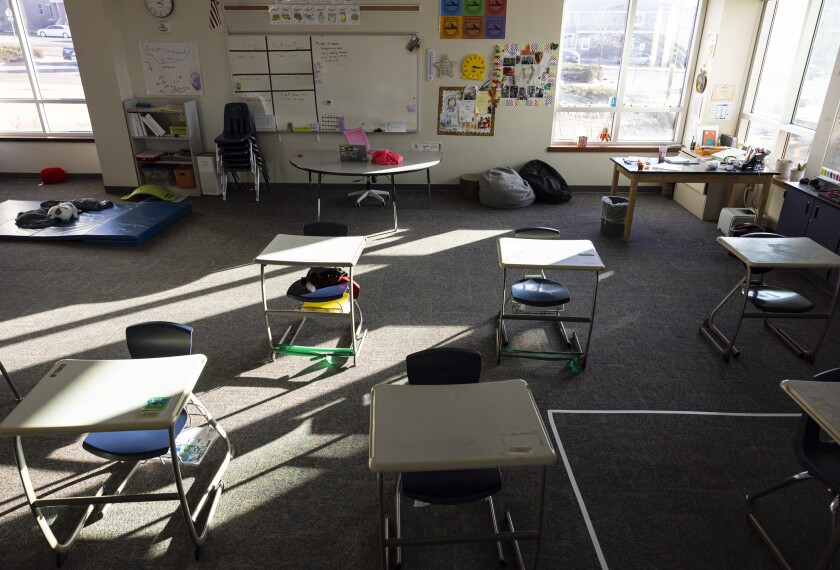
Before becoming a physician, I worked as a middle school science teacher in Newark, N.J. My students were constantly forced to navigate immense social challenges, including poverty and violence. However, I often found that the biggest threat to their educational success, especially those with asthma, was their inability to regularly attend school. After all, how could I teach my students if they weren’t in school to begin with?
This spring, after some delay, the Environmental Protection Agency may unravel regulations on existing coal power plants, which has potential consequences for the environment and for human health. The connection to education, though, may not be obvious to everyone. When I think about the likely negative health effects of the rule change, one former science student of mine, who we will call “C,” leaps to mind.
In August 2018, the EPA released a proposal to replace the Obama Administration’s Clean Power Plan with the less-strict Affordable Clean Energy Rule, which would relax pollution standards for existing power plants. By the agency’s own admission, this plan would lead to the release of more particulate matter—tiny particles in the air that are known to cause and exacerbate respiratory disease. This could have a catastrophic effect on the academic success of students across the nation.
Back to my former student, C. After my first few interactions with him, I was persuaded that he was set up to succeed. He was naturally curious, always attentive, and scored highly on his in-class assignments. It came as no surprise to me that he achieved the highest score in his class on his first test.
But as the year continued, C’s performance slipped. He was still laser-focused in class and completed his homework accurately and on time. But from my vantage point as his teacher, the reason for his decline could not have been more apparent: C was simply missing too many days of school.
C had severe asthma, and when he had flares of his disease, his breathing would be so impaired that he would struggle to get to school. Despite all of his gifts—his curiosity, his work ethic, his ability to recall even the most insignificant piece of information—C could not overcome an overwhelming loss of instructional time. His respiratory disease, aside from harming his health, played a starring role in undermining his education. It was heart-breaking to watch him try so hard to manage the interconnected challenges of his education and health.
The challenge of regularly attending school was not unique to my students. In fact, 8.4 percent of American children suffer from asthma, and about half miss one or more days of school because of it. Collectively, children with asthma miss nearly twice as many days of school as children without asthma, accounting for nearly 14 million missed days annually. Children who must visit the ER or be hospitalized to control their asthma are the worst off: They miss school at a rate that is nearly four times higher than children without asthma.
Having seen firsthand the detrimental effects that asthma can have on a student’s academic achievement, I am concerned that the EPA’s proposed rollback of the Clean Power Plan will curtail the education opportunities available to thousands of American students with asthma. In their coverage of the proposed Affordable Clean Energy rule, most newspapers and media around the country understandably have focused on the EPA’s projection that the change could lead to an additional 470 to 1,400 premature deaths annually as compared with the CPP. But these headline figures don’t include additional worrisome impacts of the rule. The EPA also predicted that the plan could lead to an additional 48,000 asthma exacerbations and 21,000 missed school days in 2030.
If the ACE Rule goes forward, students with asthma across the United States stand to suffer. Not only would their health be detrimentally affected, but their opportunity to obtain a quality education would be severely threatened. Given the clear evidence of a link between the amount of direct instructional time and academic achievement, we have an obligation to ensure that all students in America are able to go to class as much as possible. The EPA’s proposal works against that goal.
If the EPA is truly concerned about the impact of its policymaking on the environment, human health, and the most vulnerable Americans, it should reconsider its rollback of the Clean Power Plan. The Trump administration’s Affordable Clean Energy Rule would slow the decline of greenhouse gases, make Americans sicker, and curtail the education opportunities available to students with asthma across the country. The EPA can and must do better.