School & District Management

List of GOP Presidential Hopefuls Continues to Swell

By Andrew Ujifusa & Alyson Klein — July 07, 2015 2 min read
  • Save to favorites
  • Print

Former Florida Gov. Jeb Bush

BRIC ARCHIVE

Former Florida Gov. Jeb Bush, who officially entered the 2016 presidential race June 15, has perhaps the most extensive record on education among all the Republican presidential hopefuls.

Mr. Bush, who served two terms as Florida’s governor before leaving office in 2007, has since left his role as head of the Foundation for Excellence in Education, the national K-12 policy group he founded. He had used the foundation to lobby other states to adopt policies similar to those he championed when he was governor regarding school choice and literacy.

As governor, Mr. Bush successfully pushed his state to adopt a plan holding schools accountable using A-F letter grades. Under him, the state also instituted a voucher program, later struck down by the state Supreme Court. And in 2001, he signed into law a tax-credit scholarship program used by about 70,000 low-income students in the most recent school year.

In 1999, Florida also allowed alternative certification for teachers. And in 2003, the state ended social promotion for 3rd graders who could not demonstrate literacy.

More recently, although many other GOP presidential hopefuls have come out against the Common Core State Standards, Mr. Bush has vigorously defended them.

Louisiana Gov. Bobby Jindal

BRIC ARCHIVE

In his newly launched bid for the 2016 Republican presidential nomination, Louisiana Gov. Bobby Jindal brings a K-12 record heavy on positions involving the common standards and school choice.

In 2012, for example, he approved a statewide expansion of vouchers to cover a greater range of students based on their household income and the rating of the public schools they attended.

On the issue of the common core, Gov. Jindal was initially a supporter but now opposes the standards, as well as the aligned tests from the Partnership for Assessment of Readiness for College and Careers. He has made numerous, albeit unsuccessful, attempts in state court to ditch the standards and PARCC. He still has an anti-common-core lawsuit against the federal government moving ahead in federal court.

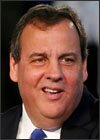
New Jersey Gov. Chris Christie
BRIC ARCHIVE

New Jersey Gov. Chris Christie, who announced his candidacy for the presidency on June 30, has a complex record on education policy that has attracted fierce supporters and detractors.

The Republican, who took office in 2010, once backed the common core, but officially repudiated the standards in May. He has said the state would begin work on reviewing and improving them.

His efforts to revamp the Newark district have been controversial. His 2011 pick as superintendent of the state-run district, Cami Anderson, recently said she would step down, and Gov. Christie has said the state would return Newark schools to local control.

Gov. Christie also altered the state’s laws governing teacher tenure in 2012, making tenure harder to obtain. He earned a reputation early on as a K-12 budget-cutter, but in his 2013 re-election campaign, he said the state was providing a record level of school funding. The fiscal 2016 budget he just signed, however, has reignited claims that he’s slashed support for public education.

Real Estate Developer Donald Trump

BRIC ARCHIVE

Real estate developer Donald Trump, who announced his intention to join the 2016 GOP presidential-primary field June 16, has made clear where he differs from at least one rival on the hot-button issues of the common core.

“The last thing we need is another Bush,” Mr. Trump said of fellow candidate former Florida Gov. Jeb Bush at the Iowa Freedom Summit this year, according to a C-SPAN transcript. “He’s totally in favor of common core.”


Related Tags:

A version of this article appeared in the July 08, 2015 edition of Education Week as Fresh Entrants In GOP’s Quest For White House

Events

This content is provided by our sponsor. It is not written by and does not necessarily reflect the views of Education Week's editorial staff.
Sponsor
Artificial Intelligence Webinar
AI in Schools: What 1,000 Districts Reveal About Readiness and Risk
Move beyond “ban vs. embrace” with real-world AI data and practical guidance for a balanced, responsible district policy.
Content provided by Securly
This content is provided by our sponsor. It is not written by and does not necessarily reflect the views of Education Week's editorial staff.
Sponsor
Recruitment & Retention Webinar
K-12 Lens 2026: What New Staffing Data Reveals About District Operations
Explore national survey findings and hear how districts are navigating staffing changes that affect daily operations, workload, and planning.
Content provided by Frontline Education
Education Funding Webinar Congress Approved Next Year’s Federal School Funding. What’s Next?
Congress passed the budget, but uncertainty remains. Experts explain what districts should expect from federal education policy next.

EdWeek Top School Jobs

Teacher Jobs
Search over ten thousand teaching jobs nationwide — elementary, middle, high school and more.
View Jobs
Principal Jobs
Find hundreds of jobs for principals, assistant principals, and other school leadership roles.
View Jobs
Administrator Jobs
Over a thousand district-level jobs: superintendents, directors, more.
View Jobs
Support Staff Jobs
Search thousands of jobs, from paraprofessionals to counselors and more.
View Jobs

Read Next

School & District Management Opinion 6 Years Ago, Schools Closed for COVID. Have We Learned the Right Lessons?
A school administrator outlines four priorities to guide true recovery from the pandemic.
Robert Sokolowski
5 min read
FILE - In this Aug. 26, 2020, file photo, Los Angeles Unified School District students stand in a hallway socially distance during a lunch break at Boys & Girls Club of Hollywood in Los Angeles. California Gov. Gavin Newsom is encouraging schools to resume in-person education next year. He wants to start with the youngest students, and is promising $2 billion in state aid to promote coronavirus testing, increased ventilation of classrooms and personal protective equipment.
Los Angeles public school students maintain social distance in a hallway during a lunch break in 2020.
Jae C. Hong/AP
School & District Management How Assistant Principals Build Stronger School Communities
From middle to high school, assistant principals share what they've done to increase engagement and better student behavior.
7 min read
Image of a school hallway with students moving.
iStock/Getty
School & District Management LAUSD Superintendent Carvalho Breaks Silence on FBI Raid of His Home, Office
The leader of the nation's second-largest K-12 district denied wrongdoing and asked to return to his job.
Howard Blume, Richard Winton & Brittny Mejia, Los Angeles Times
4 min read
Alberto Carvalho, Superintendent, Los Angeles Unified School District, the nation's second-largest school district, comments on an external cyberattack on the LAUSD information systems during the Labor Day weekend, at a news conference at the Roybal Learning Center in Los Angeles Tuesday, Sept. 6, 2022. Despite the ransomware attack, schools in the nation's second-largest district opened as usual Tuesday morning.
Los Angeles Unified School District Superintendent Alberto Carvalho speaks at a news conference on Sept. 6, 2022. The FBI raided the superintendent's home and office last month, and he's been placed on leave.
Damian Dovarganes/AP
School & District Management Opinion My Surgeon Gave Me a Lesson in School Leadership
When a personal health issue forced me to get vulnerable with my staff, I learned a lot from my doctor.
Sarah Whaley
3 min read
Allowing for vulnerability while leading a team.
Vanessa Solis/Education Week via Canva
