School Climate & Safety

Curriculum Offers Lessons on Recycling Technology

By Laura Greifner — March 13, 2007 1 min read
  • Save to favorites
  • Print

A new curriculum from the Hewlett-Packard Co. and Scholastic Inc. aims to broaden students’ understanding of environmental issues related to technology.

Free to teachers, the program was mailed to 132,000 educators of 4th to 6th graders in November and is also online at www.scholastic.com/techloop. The curriculum offers lessons on electronics and the environment for use as part of schools’ science, mathematics, and language arts programs.

One lesson covers how to safely dispose of old technology, for example. “Let students understand that some components of electronics may contain substances that make them difficult to recycle—for example, computer monitors and older TV picture tubes contain lead and require special handling at the end of their lives,” teachers are told.

Related worksheets ask questions and give students step-by-step guidance in writing and revising “a report that outlines how technology is currently being used to solve an environmental issue.” A sample question: “According to the U.S. [Environmental Protection Agency], more than 20 million personal computers became obsolete in 1998 and only 1 percent were reused or recycled. How many computers were not reused or recycled?”

Also included in the curriculum are family-activity worksheets, in English and Spanish versions, to be filled out at home.

See Also

For more stories on this topic see Technology and Curriculum and Learning.

For background, previous stories, and Web links, read Technology in Education.

Related Tags:

A version of this article appeared in the March 14, 2007 edition of Education Week

Events

This content is provided by our sponsor. It is not written by and does not necessarily reflect the views of Education Week's editorial staff.
Sponsor
Artificial Intelligence Webinar
Managing AI in Schools: Practical Strategies for Districts
How should districts govern AI in schools? Learn practical strategies for policies, safety, transparency, as well as responsible adoption.
Content provided by Lightspeed Systems
This content is provided by our sponsor. It is not written by and does not necessarily reflect the views of Education Week's editorial staff.
Sponsor
Reading & Literacy Webinar
Unlocking Success for Struggling Adolescent Readers
The Science of Reading transformed K-3 literacy. Now it's time to extend that focus to students in grades 6 through 12.
Content provided by STARI
Jobs Virtual Career Fair for Teachers and K-12 Staff
Find teaching jobs and K-12 education jubs at the EdWeek Top School Jobs virtual career fair.

EdWeek Top School Jobs

Teacher Jobs
Search over ten thousand teaching jobs nationwide — elementary, middle, high school and more.
View Jobs
Principal Jobs
Find hundreds of jobs for principals, assistant principals, and other school leadership roles.
View Jobs
Administrator Jobs
Over a thousand district-level jobs: superintendents, directors, more.
View Jobs
Support Staff Jobs
Search thousands of jobs, from paraprofessionals to counselors and more.
View Jobs

Read Next

School Climate & Safety 4 Ways Schools Can Build a Stronger, Safer Climate
A principal, a student, and a researcher discuss what makes a positive school climate.
4 min read
A 5th grade math class takes place at Lafargue Elementary School in Effie, Louisiana, on Friday, August 22. The state has implemented new professional development requirements for math teachers in grades 4-8 to help improve student achievement and address learning gaps.
Research shows that a positive school climate serves as a protective factor for young people, improving students’ education outcomes and well-being during their academic careers and beyond. A student raises her hand during a 5th grade class in Effie, La., on Aug. 22, 2025.
Kathleen Flynn for Education Week
School Climate & Safety Schools Flag Safety Incidents As Driverless Cars Enter More Cities
Agencies are examining reports of Waymos illegally passing buses; in another case, one struck a student.
5 min read
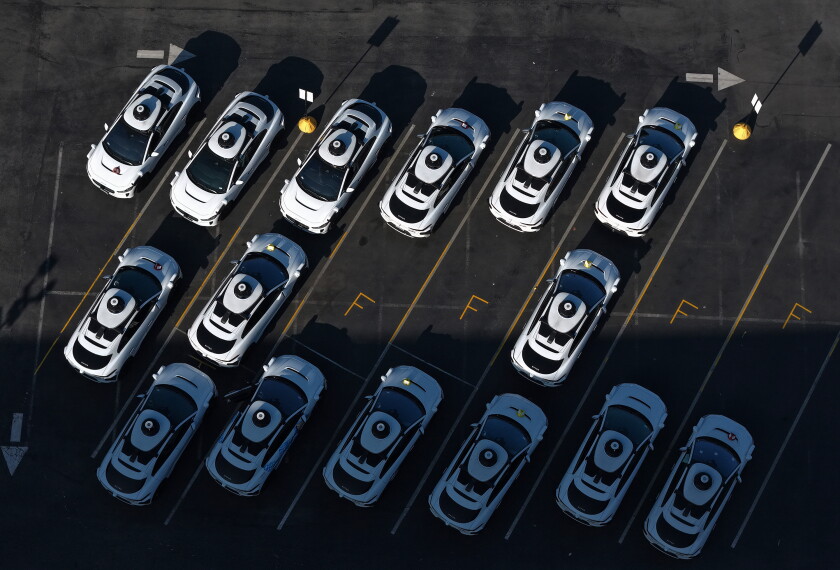
In an aerial view, Waymo robotaxis sit parked at a Waymo facility on Dec. 8, 2025 , in San Francisco . Self-driving taxi company Waymo said it is voluntarily recalling software in its autonomous vehicles after Texas officials documented at least 19 incidents this school year in which the cars illegally passed stopped school buses, including while students were getting on or off.
Waymo self-driving taxis sit parked at a Waymo facility on Dec. 8, 2025, in San Francisco. Federal agencies are investigating after Austin, Texas, schools documented incidents in which the cars illegally passed stopped school buses. In a separate incident, a robotaxi struck a student at low speed as she ran across the street in front of her Santa Monica, Calif., elementary school.
Justin Sullivan/Getty Images via TNS
School Climate & Safety Informal Classroom Discipline Is Hard to Track, Raising Big Equity Concerns
Without adequate support, teachers might resort to these tactics to circumvent prohibitions on suspensions.
5 min read
Image of a student sitting outside of a doorway.
DigitalVision
School Climate & Safety Tracker School Shootings This Year: How Many and Where
Education Week is tracking K-12 school shootings in 2026 with injuries or deaths. See the number of incidents and where they occurred.
3 min read
Sign indicating school zone.
iStock/Getty