Washington dignitaries and civil rights activists gathered today in the nation’s capital for the funeral of William L. “Bill” Taylor, a lawyer who devoted decades of his life to desegregating U.S. schools. Mr. Taylor died on June 28 at the age of 78 of complications from a fall.
“Bill was one of the very most accomplished desegregation lawyers in the country and successfully litigated many school desegregation suits, which is not a one-time process,” said David J. Goldberg, the senior counsel and senior policy analyst for the Washington-based Leadership Conference on Civil and Human Rights. “Even successful suits require years of enforcement. Bill didn’t just win suits and go away. He stayed engaged.”
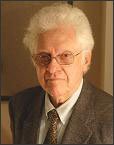
Mr. Taylor was the founder and chairman of the Citizens’ Commission on Civil Rights, a government-watchdog organzation based in Washington, and a vice chairman of the Leadership Conference, a coalition of more than 200 national civil and human rights groups. During the 1960s, he was the general counsel and staff director of the U.S. Commission on Civil Rights.
“Whether he was in the courtroom, the halls of government, or in a congressional hearing room, Bill Taylor was a consistent voice for equality and justice—a voice that will be deeply missed,” U.S. Secretary of Education Arne Duncan said yesterday in a statement.
U.S. Rep. George Miller, D-Calif., the chairman of the House Education and Labor Committee, released a statement saying that “Bill’s steadfast commitment to helping all children shaped the way we educate children in this country.”
Education Reformer
As a lawyer with the NAACP Legal Defense and Educational Fund, Mr. Taylor was mentored by Thurgood Marshall, the first African-American to become a U.S. Supreme Court justice. Mr. Taylor litigated a number of school desegregation cases.
He successfully litigated school desegregation cases in St. Louis, Cincinnati, and Fort Wayne, Ind.
Dianne Piche, the special counsel for the office for civil rights of the U.S. Department of Education, was a colleague of Mr. Taylor for 25 years. Initially, she worked for him as a law intern in the law school of the Catholic University of America, where he ran a civil rights policy clinic. Later, Ms. Piche became the executive director of the Citizens’ Commission on Civil Rights, which Mr. Taylor founded in 1982.
Other than being recognized for his role in landmark desegregation cases, Mr. Taylor is well known for having been one of the first civil rights activists to embrace standards-based school reform as a remedy for closing the achievement gap between low-income or minority students and other students, she said in a phone interview today.
“When we say, ‘All children can learn,’ all means all,” she said. “Bill was really in the forefront of articulating that concept.”
She said he was instrumental in getting Title I, the section of the Elementary and Secondary Education Act authorizing funds for disadvantaged students, revamped in a reauthorization of the federal education law during former President Bill Clinton’s administration. Before that reauthorization, she said “the Title I program contributed to the kind of dual system of education that the courts sought to eliminate in Brown v. Board of Education, requiring very small achievement gains, relying largely on pullout programs, using untrained teachers and paraprofessionals.”
Mr. Taylor was “huge-hearted and fearless” in fighting for the civil rights of low-income and minority children, said Amy Wilkins, the vice president for government affairs and communications for the Washington-based Education Trust. “Bill was relentless on behalf of kids that most people didn’t care about,” she added. While she sometimes disagreed with him on which policy was the right one, she said, she did not question his moral compass, which was “true.”
Mr. Taylor was a resident of Washington. His wife, Harriett Rosen Taylor, a senior judge of the District of Columbia Superior Court, died in 1997.


