The Education Commission of the States has chosen a community college president who has been an adviser to two governors to be its next president, the group announced last week.
Piedad F. Robertson, the president of Santa Monica College, a public two-year institution near Los Angeles, will take over the top position at the Denver-based clearinghouse for state policy on Feb. 1.
Ms. Robertson served on the transition team for Gov. Arnold Schwarzenegger of California last year and is a special adviser to his secretary of education, Richard J. Riordan.
From 1991 to 1995, she was the secretary of education for Massachusetts Gov. William F. Weld, who, like Mr. Schwarzenegger, is a Republican. In that capacity, she helped craft the state’s 1993 school reform law, which created the Massachusetts Comprehensive Assessment System and established charter schools in the state.
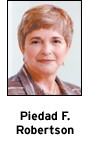
In an interview last week, Ms. Robertson said that schools throughout the country are facing many of the testing and accountability issues that were the foundation of that Massachusetts law more than a decade ago.
“The bottom line is the same,” she said. “We have to do the best we can to educate children.”
In her new post, Ms. Robertson will oversee a staff of about 50 people and a budget of $11 million. The ECS was founded in 1965.
The bipartisan ECS search committee unanimously recommended Ms. Robertson because of her “unique blend of experience at both the state and local levels in all phases of education from preschool to higher education,” Gov. Mike Huckabee of Arkansas, the chairman of the ECS, said in a statement.
In addition, the Republican governor said, Ms. Robertson’s bipartisan approach demonstrates she is “more interested in getting the job done than in ideology.”
Challenges Ahead
Policymakers throughout the country, whether Democrats or Republicans, face “formidable challenges,” said Ted Sanders, the ECS’ outgoing president.
And they often turn to the ECS for technical assistance to meet those challenges.
For example, the federal No Child Left Behind Act will require them to implement accountability and reporting systems that are more complicated than any they’ve had before, added Mr. Sanders, who will leave his post in early January after five years. (“Ted Sanders Announces Resignation As ECS President,” July 14, 2004.)
States also must devise strategies to improve schools that fail to make adequate yearly progress under the 3-year-old law’s timelines.
“States do not have the knowledge or capacity to intervene in schools that are not making adequate yearly progress,” Mr. Sanders said.
They’re also struggling, he added, to ensure that all their teachers are deemed highly qualified by the end of the 2005-06 school year—a mandate that reflects another priority of the federal law.
His successor “has the kind of diverse background and leadership experiences that will make her a perfect fit for ECS,” Mr. Sanders said.
The chance to be part of the federal law’s implementation, Ms. Robertson said, is why she is excited about taking the reins of the ECS at this point in its 39-year history.
“This is an opportunity to work on educational policy issues and to get information to guide the states as they make very difficult decisions,” she said shortly after the ECS announced her appointment.
She said she expects to travel extensively in order to stay in touch with state policymakers and keep apprised of their needs.
“The biggest challenge I see for us is to make sure we don’t lose track of what the needs of the states are,” she said.
It’s hard to do that “when you are in an isolated office,” she said.
Ms. Robertson, 66, emigrated to Florida from Cuba in 1960 and earned bachelor’s and master’s degrees from the University of Miami. She completed her doctorate in education at Florida Atlantic University in 1977.
She worked for Miami-Dade Community College in various administrative positions from 1980-1988.
That year, she moved to Boston to become the president of Bunker Hill Community College, a position she held until 1991.
She will formally become the president of the ECS on Feb. 1, but will start working on the transition to her new job in January.
She said she will live in Denver but keep a residence in California, where her husband will continue as a faculty member at Santa Monica College.


