

Student Well-Being & Movement Download

5 Strategies to Help Students Build Academic and Social Resilience

By Lauraine Langreo — August 14, 2026 2 min read
Routines
  • Save to favorites
  • Print

Resilience—the ability to adapt through adversity—is like a muscle: the more you exercise it, the stronger the muscle becomes, said Ronald Palomares, an associate professor of school psychology at Texas Woman’s University.

Older research mistakenly concluded that resilience was a trait—either you have it or you don’t. More recent research suggests that it’s something people can build over time as they face adversity, whether it’s major trauma or minor stressors, Palomares said during a session at the American Psychological Association’s annual conference held in Washington Aug. 6-8.

Resilience is multidimensional, affected by a person’s environment, not just their individual mental well-being, Palomares said. It’s also transformative, helping people adapt, recover, and grow, he added.

Building children’s capacity for resilience is essential to their health and well-being, according to research.

At the Aug. 6 session, Palomares and Laurel Jones, a doctoral student in school psychology at Texas Woman’s University, shared five strategies educators can use to help their students become more resilient.

Kindness Emily Wright/Education Week + Getty

1. Encourage students to be kind to themselves

When something bad happens, encourage students to go easy on themselves. Remind them to take care of their basic needs, such as getting enough sleep, eating properly, taking breaks, and doing something they enjoy. Adults in a school building can also model this strategy; for instance, if there’s a troubling event that affects the whole school, such as a flood or wildfire, educators can talk about what steps they are taking to be kind to themselves.

2. Show them how to stick to routines

Having a routine helps ground children with confidence and a calm demeanor. During times of distress or transition, the routine might need to be a little flexible, but it’s still important to have some structure and consistency. Schools can help by maintaining familiar classroom environments and routines, providing stability and a sense of safety for the students.

Talking Emily Wright/Education Week + Getty

3. Tell kids to talk more with friends and adults

Encourage students to talk with their friends, family members, or other trusted adults about what they’re going through. Show them how to get connected to their communities, whether through clubs, sports, or other activities. Schools can help by providing opportunities for students to connect with each other.
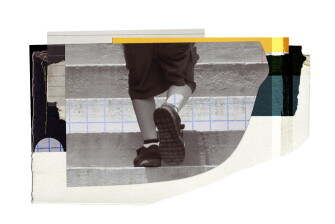
SmallSteps Emily Wright/Education Week + Getty

4. Take small steps toward bigger goals

Hard times can make young people feel a loss of control for the direction of their lives. Remind them that even in hard times, they can move toward goals one small step at a time. Help them focus on things they can control, or even things out of their control that they can do something about. This could look like helping students focus on specific tasks or breaking down big assignments to more manageable chunks.

HelpingOthers Emily Wright/Education Week + Getty

5. Emphasize the value of helping others

Encourage students to help someone else. This can provide a sense of empowerment and accomplishment and might help them get their minds off the problems that are bothering them. Schools can provide opportunities for students to volunteer in their communities or at school by helping other students in their classes or in the grades below them.

Illustrations by Emily Wright/Education Week + Getty

Download This Resource

ew downloadable student resilience

Events

This content is provided by our sponsor. It is not written by and does not necessarily reflect the views of Education Week's editorial staff.
Sponsor
School & District Management Webinar
The Principal's Role in Collective Efficacy and Student Outcomes
Learn practical strategies that help principals translate their confidence into stronger collective teacher efficacy and student outcomes.
Content provided by Otus
This content is provided by our sponsor. It is not written by and does not necessarily reflect the views of Education Week's editorial staff.
Sponsor
Education Funding Webinar
What Schools Need to Know About the Federal Education Freedom Tax Credit
What schools need to know about the federal Education Freedom Tax Credit: A practical guide from a licensed teacher and policy expert.
Content provided by LearningSpring
This content is provided by our sponsor. It is not written by and does not necessarily reflect the views of Education Week's editorial staff.
Sponsor
School Climate & Safety Webinar
Building Your School Safety Roadmap: Key Priorities for the Upcoming Year
What should be on your school's safety roadmap this year? Join experts to discuss priorities, preparedness, and best practices.
Content provided by Evolv Technology & IdentiSys

EdWeek Top School Jobs

Teacher Jobs
Search over ten thousand teaching jobs nationwide — elementary, middle, high school and more.
View Jobs
Principal Jobs
Find hundreds of jobs for principals, assistant principals, and other school leadership roles.
View Jobs
Administrator Jobs
Over a thousand district-level jobs: superintendents, directors, more.
View Jobs
Support Staff Jobs
Search thousands of jobs, from paraprofessionals to counselors and more.
View Jobs

Read Next

Student Well-Being & Movement Teen Mental Health Is Improving, CDC Finds. Then Why Are Experts Still Concerned?
Student mental health remains a big challenge for schools to address.
5 min read
Student sitting criss cross pondering.
Collage by Laura Baker/Education Week + Getty
Student Well-Being & Movement Skimping on Recess Won't Fix Test Scores, Experts Say
Parent advocates are spreading the research-backed message: Kids need to move during the school day.
5 min read
HOUSTON, TEXASA - MARCH 18: Students play in the playground of Iman Academy Southwest is photographed on Tuesday, March 18, 2025 in Houston.
Students play in the playground of Iman Academy Southwest on March 18, 2025 in Houston. Across the country, many schools prioritize instructional time over recess—despite research that shows opportunities for play can improve academic performance.
Raquel Natalicchio/Houston Chronicle via Getty Images
Student Well-Being & Movement Opinion It's Football Season. That Matters More to Schools Than It Should
How did athletics beat out academics as the highest priority for public schools?
Robert Maranto
•
4 min read
Image of two students walking down a hall in isolation and in the background, you see silhouettes of a women's lacrosse team celebrating together in a huddle.
Laura Baker/Education Week + Getty
Student Well-Being & Movement Billions Will Flow to States Through Meta Settlement. Will Schools Benefit?
Schools could share in the payout. Meta's design feature changes could also help, experts say.
7 min read
Attorney's representing multiple states pose for a photograph outside court after after tech giant Meta reached a settlement to end a landmark trial over teen social media addiction in Oakland, Calif., Wednesday, Aug. 26, 2026.
Attorneys representing multiple states pose for a photograph outside a federal court in Oakland, Calif., after after tech giant Meta reached a settlement to end a landmark trial over teen social media addiction on Aug. 26, 2026. The settlement terms and payments could have major effects on students and schools, according to legal and technology experts.
Noah Berger/AP
