As an independent school student, teacher, coach, adviser, administrator, and most recently parent, I’ve drunk deep of the message that there is a legitimate and worthy alternative to public education. In my many roles, I have seen educators toil and students struggle, and I have seen hard work pay off in myriad kinds of authentic student success.
I am well aware that not everyone sees the virtues of independent education. Our schools are called exclusive, even elitist, and overresourced, and we are accused of merely basking in the reflected glory of family wealth that guarantees our students’ success. As usual, though, popular images exaggerate reality; only a tiny portion of independent schools are hyperselective, and fewer still are heavily endowed with either new or old money. Most independent schools—and as an industry we represent an astounding spectrum of missions, cultures, and purposes—are tuition-driven and serve students with a wide range of capacities from families who work hard for their money. Most schools also happen to offer generous financial aid.
In any event, I’m not here to plead the case for independent schools; they can do that for themselves.
Instead, I want to issue a challenge, primarily to independent schools and their leaders, but also to public school educators.
Some background: For the last 20 or so years, from an independent school perspective, the public sector has staggered under a succession of regulatory measures that appear misguided at best and at worst downright punitive toward teachers, schools, and above all students, especially in the most economically disadvantaged districts. The national conversation on education has focused on “failing” schools, allegedly incompetent teachers, and disaffected and disengaged communities of students and parents—as if these were somehow the norm. I don’t believe they are, but politicians have made hay on the issue, which now seems to have been “resolved” across the board by an oppressive regime of standardized testing, with teacher “evaluation” and even school funding based on scores. High stakes, indeed.
Public school leaders [should] ask independent schools, perhaps even demand of us, how we might be of service."
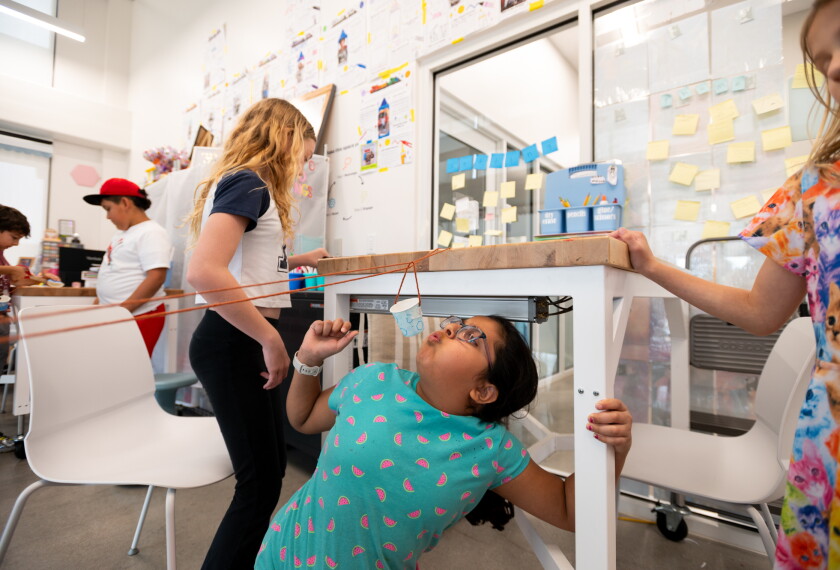
During these same two decades, independent schools have been awakening from what, we must admit, was a kind of programmatic lethargy dating from an earlier, less educationally illustrious era. In this recent period, our best classrooms have become hotbeds of such practices as project- and problem-based learning; student collaborations; the intensive development of technology as a tool for teaching and learning; active civic engagement; intensive science, technology, engineering, and mathematics, or STEM, programming; and new forms of classroom and overarching assessment—all undertaken against the rigorous standards imposed de facto by a competitive marketplace.
Leading schools have embraced every aspect of every enumeration of “21st-century skills” as major learning objectives, with creativity and innovation at the core of all. Perhaps not surprisingly, some of the most established and well regarded of the “old schools"—places that could coast on their reputations for decades to come—have begun to use their prestige to leverage vaulting change in the way they teach and construct learning experiences for their students.
Innovation has become the byword, at least aspirationally, in independent education, but not, praise be, at the expense of the more traditional values that have characterized independent schools. A century before there were charter schools built around cherished principles of curriculum or character education, in dependent schools were forming themselves around curricular and affective missions and core values that still define individual schools—perhaps even more sharply in 2012 than they may have done in 1912, thanks to a renewed emphasis on these outcomes as elements of the student experience at each school. Successful independent schools take the concept of “student centered” as a mantra, an obligation—and again, the harsh realities of a highly competitive market compel independent schools to walk the walk, if they are to thrive.
Our schools are not perfect, and no one should claim that they are. But independent schools are by and large delivering on a number of promises in areas of academic and affective (and in the case of schools with faith-based heritages or missions, spiritual) learning and development that experts tell us are critical to the creation of the flexible, creative, ever-learning, active citizenry and workforce that our world will need to meet the daunting conditions of the future.
And so, my challenge: It’s time for a true national dialogue in which independent school educators take the lead in sharing the lessons we have been learning in recent years. The other parties to this dialogue must be public and other kinds of schools.
It’s time for independent schools to assert their way as a body into the larger conversation on education, locally, severally, and nationally. We need to start talking about ourselves as places of teaching and learning, gently pushing aside assumptions of prestige and focusing on what we truly know about educating children. Many of our schools have embraced the idea of their public purpose, and here is a way to express that purpose in a manner that transcends even the most ambitious local or regional partnerships aimed at community service, tutoring, or professional development.

It’s also time for public school leaders—and I realize that this may be asking a great deal of men and women with little time to spare—to ask independent schools, perhaps even to demand of us, how we might be of service. It’s easy to say that independent school people just don’t get it, but we have to try, and public-sector educators have to help us—and to try to understand us. In the real world we occupy, independent schools aren’t going to just empty their coffers into the till of public education, declare themselves deceased, and bring about an instant Finland with great public schools for every child and no private education.
What independent schools have to contribute, I think, are ideas—ideas on effective ways to deliver high-quality, high-standards learning experiences to all kinds of students. No, we’re not perfect, and not every one of our best practices can be replicated. But for a while now we have had the luxury, if you will, of being able to implement, unfettered by politics, new practices based on new understandings of how children learn and grow, and I believe we have a public obligation to share our experiences.
I don’t quite know how this dialogue should start—a series of colloquia, perhaps, or maybe a giant conference. In time, I would hope to see teachers talking to teachers across sector frontiers in ways that are only too rare right now. The time is right.
I don’t imagine that my cry for dialogue here is going to change everything overnight. But we are all educators together, and we all believe in children and in the future. I can’t make myself not believe that we can and will learn from one another. Independent schools have plenty to learn, but the dialogue for which I am calling needs to be based on a recognition—by ourselves, above all—that we also have something to teach.