School Climate & Safety

Cleveland Schools Faulted on Climate

By Christina A. Samuels — August 25, 2008 1 min read
  • Save to favorites
  • Print

The Cleveland school district has an inconsistent approach to how it handles students’ behavior problems that must be addressed, in part, by better training of school personnel, says a study by a Washington-based research group.

The 52,000-student district requested the report on schools’ capacity to handle students with mental and behavior needs after a 14-year-old opened fire at a school last August, wounding two teachers and two other students before killing himself. Another report requested in the wake of the shooting focused specifically on security improvements.

The American Institutes for Research study was based on more than 100 interviews, a student survey, site visits, and a review of school documents. David Osher, the lead author and a managing director at the air, said the report was one of the most thorough he has conducted on an urban district.

Among the challenges noted by the researchers were harsh and inconsistent punishments in schools, poor adult role modeling, and a weak family-school connection.

Students were asked to rate their schools on a “safe and respectful climate,” which measures how physically and emotionally safe students feel. About 46 percent of middle school students thought their school environment “needs improvement.” Also, more than 48 percent of responding high school students said they worry about crime and violence in school, and almost 43 percent reported that students are threatened or bullied at their high school.

Mr. Osher said Cleveland officials took pains to convince him that they wanted a deeper look at mental-health capacity in the city and schools, and weren’t just looking for a symbolic gesture. In press reports, Cleveland officials said they welcomed the report’s candor.

“People are poised to be willing to take the next implementation steps,” Mr. Osher said in an interview. The institute drafted a four-year plan and intends to work with Cleveland schools for six months, he said.

Related Tags:

A version of this article appeared in the August 27, 2008 edition of Education Week

Events

This content is provided by our sponsor. It is not written by and does not necessarily reflect the views of Education Week's editorial staff.
Sponsor
Student Absenteeism Webinar
Attendance Isn't an Attendance Problem
Boost attendance by strengthening relationships, belonging, and support with practical strategies from Doug Fisher & Nancy Frey.
Content provided by Corwin
This content is provided by our sponsor. It is not written by and does not necessarily reflect the views of Education Week's editorial staff.
Sponsor
Classroom Technology Webinar
Screen Time and AI: An Evidence Playbook for School Leaders
Get a clearer picture of the current policy landscape, a framework for evaluating new tools, plus language to use in the next board meeting.
Content provided by Instructure
This content is provided by our sponsor. It is not written by and does not necessarily reflect the views of Education Week's editorial staff.
Sponsor
School & District Management Webinar
The Principal's Role in Collective Efficacy and Student Outcomes
Learn practical strategies that help principals translate their confidence into stronger collective teacher efficacy and student outcomes.
Content provided by Otus

EdWeek Top School Jobs

Teacher Jobs
Search over ten thousand teaching jobs nationwide — elementary, middle, high school and more.
View Jobs
Principal Jobs
Find hundreds of jobs for principals, assistant principals, and other school leadership roles.
View Jobs
Administrator Jobs
Over a thousand district-level jobs: superintendents, directors, more.
View Jobs
Support Staff Jobs
Search thousands of jobs, from paraprofessionals to counselors and more.
View Jobs

Read Next

School Climate & Safety Opinion AI-Assisted or Not, School Threat Assessment Starts in Classrooms
Leaders must involve teachers when creating an effective school safety system.
Jillian Haring
5 min read
Teacher silhouette watches over students looking for early warning signs, classroom threat assessment
Vanessa Solis/Education Week + Getty
School Climate & Safety What Happens When a Data Center Is Built Near a School?
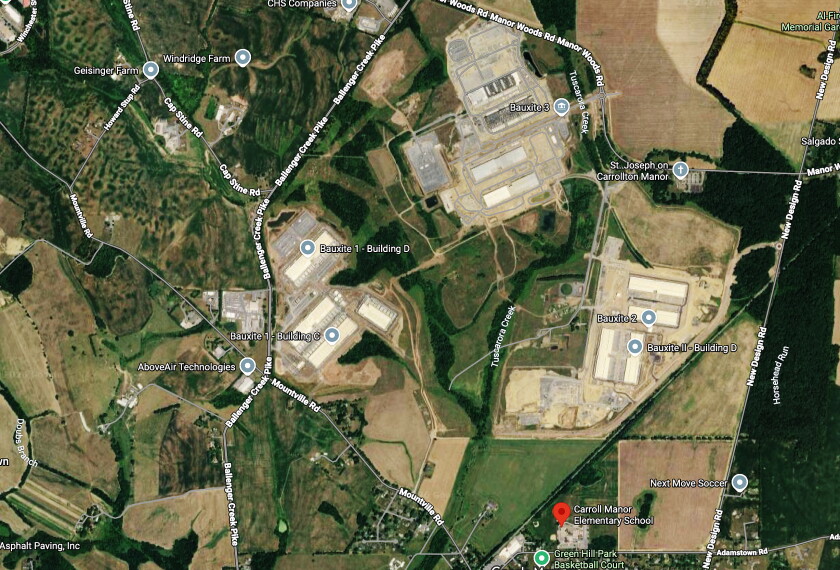
In Frederick County, Maryland, the school board was challenging the construction of a data center that would sit only a few feet away from an elementary school.
4 min read
DataCenter004
A data center is proposed to be built on a small piece of land about 500 feet near the Carroll Manor Elementary School in Adamstown, Md., pictured on Sept. 10, 2026. The black flags serve as an area marker for where the data center will be built.
Marvin Joseph/Education Week
This content is provided by our sponsor. It is not written by and does not necessarily reflect the views of Education Week's editorial staff.
Sponsor
School Climate & Safety Sponsor
What Six Elementary Students Taught D.C. Leaders About Belonging
Students say feeling welcomed, connected, and valued at school builds belonging and gives them a reason to attend and engage.
Content provided by National University
Dr. Alejandro Diasgranados sits at a table with six students, some raising their hands, in a classroom with nature-themed curtains and name cards in front of each student.
Photo provided by National University
School Climate & Safety Many Students Are Disengaged From Learning. What Can Schools Do?
A new poll examines Gen Z students' levels of school engagement and feelings of belonging.
6 min read
raised hands, student engagement
DigitalVision Vectors