Alabama educator Ann Marie Corgill has taught for more than two decades and has no shortage of credits to her name. She’s been an author, a public speaker, a TEDx Education Fellow, and a steering committee member for the National Council of Teachers of English. In 2014, she was selected as her state’s teacher of the year, and she was a finalist to be this year’s National Teacher of the Year.
At the end of last month, though, she resigned from her teaching job, citing burdensome and inconsistent state regulations about her qualifications to teach as the primary cause.
Every state has different rules on teacher certification, which are further influenced by federal regulations. How those rules play out in the field can pose big challenges for teachers and administrators trying to navigate them.
Corgill’s situation puts a compellingly personal face on the issue of who is allowed to teach and where: a renowned and outspoken educator, pressured out of teaching after getting mired in multiple layers of bureaucracy.
“From the very first day of my career, I’ve tried to make the most of every opportunity that came my way,” Corgill said in an interview last March with Education Week Teacher. So it’s understandable that when Corgill was offered a 2nd grade teaching position this year in a disadvantaged school in Birmingham, Ala., she took it.
The school, Oliver Elementary, then informed Corgill just before Labor Day weekend that she would be moved to 5th grade, where a teacher had suddenly left. Corgill had taught 4th grade at her previous school, and holds certification from the National Board for Professional Teaching Standards to teach students ages 7 to 12, so her new school shifted her up.
“This is the reality of public school,” Corgill wrote in a blog post describing that sudden transition from 2nd to 5th grade. “This is where the rubber meets the road. This is where you learn why we have a teacher shortage and good teachers are fleeing the profession.”
Then, more than a month into her 5th grade assignment, the district informed Corgill that under state rules, she was not qualified to teach at that level.
A Teacher’s Frustrations
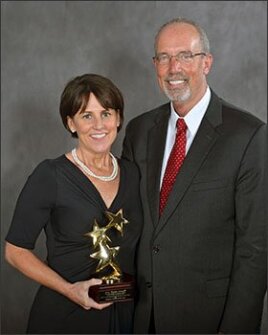
In a written statement given to the news organization AL.com, state Superintendent Thomas Bice said the distinction between Corgill’s old and new schools involved an intersection of state and federal accountability rules: Corgill’s new school, unlike her previous one, is a Title I, or designated low-income, school. Because Corgill holds state certification only in prekindergarten to 3rd grade, she was not considered “highly qualified” to teach 5th grade in accord with federal law, according to Bice. And Alabama doesn’t recognize National Board certification as an acceptable substitute for the appropriate grade-level state certification.
There’s at least one problem with that explanation: Under the No Child Left Behind Act, according to the U.S. Department of Education, the highly-qualified-teacher requirement applies to all schools in states that receive federal Title I money (all states do), not just Title I schools. That would mean that in fact Corgill shouldn’t have been teaching 4th grade at her old school, either. Responding to a request from Education Week, Bice admitted that was true, “but the sanctions are different for a Title I School.”
According to her resignation letter, the state told Corgill that if she wanted to continue teaching 5th grade, she would need to apply for a K-6 teaching certificate and take two separate Praxis licensure tests. (Praxis tests generally have a registration cost of about $120 to $160 each, and take a few hours, not including study time.)
Frustrated, Corgill resigned.
“In order to attract and retain the best teachers, we must feel trusted, valued, and treated as professionals,” she wrote in her resignation letter, published online by AL.com. “It is my hope that my experience can inform new decisions, policies, and procedures to make Birmingham city schools a place everyone wants to work and learn.”
Not that Corgill escapes culpability either.
“One of the responsibilities of being a professional is knowing what you can do and cannot do,” said Phillip S. Rogers, the executive director of the National Association of State Directors of Teacher Education and Certification.
Many questions remain about the situation leading to Corgill’s resignation: Why did Oliver Elementary move Corgill to 5th grade without checking on the certification requirements? What prompted the district to check her certification after the fact? Why wasn’t Corgill transferred back to 2nd grade? What other options was she offered?
A spokeswoman for the Birmingham district said the district could not comment on personnel issues.
‘Highly Qualified’ Confusion
Meanwhile, Corgill’s public statements reveal a teacher repeatedly vexed by her new district’s treatment of her, with the certification incident being the latest. She has said that, among other frustrations prompted by the district, it had also neglected to give her a paycheck for the first two months of the current school year.
That the matter came to a head over certification issues, however, reflects a growing area of tension in education policy.
The “highly qualified teacher” provision of the No Child Left Behind Act was meant to be a source of equity, ensuring that disadvantaged students had access to teachers with college degrees, full licensure, and subject-area competence.
In practice, the requirement has often been circumvented or softened. Since 2011, teachers entering the profession through alternative-certification programs have been considered “highly qualified.” And the U.S. Education Department has shown a willingness to grant states a waiver from the provision. In May, New Mexico received the first such waiver, by using teacher-evaluation results in lieu of fulfilling every tenet of the highly-qualified-teacher definition.
To hammer home the point: Both versions of the NCLB rewrite now pending in Congress scrap the highly-qualified-teacher framework altogether, allowing states the latitude to decide what qualifies a teacher to teach.
Another sticking point with the “highly qualified” requirement: The goals of the law obviously haven’t been realized. That’s why the Education Department has drawn a new requirement for states to come up with so-called teacher-equity plans that will encourage better distribution of effective teachers throughout states.
Layers of Complexity
State certification requirements pose their own set of complications.
States can have a multitude of different certification types.
In Alabama, for instance, teachers can be certified in early childhood (P-3), elementary education (K-6), middle school (4-8), secondary (6-12), elementary-secondary (P-12), or special education (K-6 or 6-12).
The numerous certification types are rooted in how children of different ages learn, and in the differences in subject-matter difficulty. The distinct areas allow for specialization among teachers, but also can limit schools’ and educators’ flexibility, as Corgill’s case suggests.
The lack of transferability of certifications between different states adds another layer of complexity, although many states have made headway in forging reciprocity agreements, Rogers said.
Michelle Accardi, the director of policy and partnerships for the National Board for Professional Teaching Standards, said that state certification systems have become so complex that those navigating them—and sometimes even those operating them—can get confused.
“I think there is a large opportunity, not just in Alabama, but in many other states, to look at licensure structures and look at common-sense ways to streamline those structures,” she said.
But it’s not clear that the Birmingham district has much leeway in Corgill’s case, although the teacher said in a public statement that she and the district might come to a compromise solution.
“I can’t imagine anyone from Alabama feels good about this, but there’s probably not much they can do about it,” said Rogers. “Maybe something like this might cause them to reconsider that.”


