
Includes updates and/or revisions.
Nearly all states now have comprehensive data systems that allow them to track students’ academic careers over time, and state officials are starting to dig into using the mountains of information, according to the sixth annual national survey on the subject.
The Data Quality Campaign, a Washington-based nonprofit group that promotes data use in education, released the report last week. For the first time, the survey focused on governors’ perspectives on state longitudinal-data systems, as opposed to the systems’ technical capacity.
“Leadership is critical,” said Aimee R. Guidera, the executive director of the campaign, noting that in the past year, Idaho and Maryland “leapfrogged many states that had been building along slowly,” thanks to statewide data-use programs launched by Idaho schools Superintendent Tom Luna and Maryland Gov. Martin J. O’Malley.
“There’s been incredible progress this year in states’ ability to provide access to stakeholders, including teachers and principals and parents,” Ms. Guidera said, though she added that no state has enacted all of the DQC’s recommended state policies to support data use.
Most states have made progress over the past six years in creating student-data systems with the elements that the Data Quality Campaign considers to be “essential.”
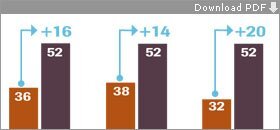
Note: The data include the 50 states plus the District of Columbia and Puerto Rico.
SOURCE: Data Quality Campaign
“We really think the next several years need to be spent on the toughest issues in [data use], around turf, trust, technical issues, and time,” she said in an interview. “This is much knottier and hard to solve, because it deals with changing behavior. It’s much easier to build a data system that collects information.”
Infrastructure Complete
The 2011 survey finds states have basically completed that first phase of developing data infrastructure.
This will be the last year that the DQC will track states’ progress in what it considers the 10 “essential elements” of student data systems because, as the report concludes, “without exception, every state in the country has robust longitudinal data that extend beyond test scores and could inform today’s toughest education decisions.”
Nearly all states now have a unique identification code for each student. They also have student-level enrollment, demographic, and program data, as well as high school graduation data, college-readiness-test results, and the ability to match P-12 and postsecondary student records. All or nearly all states also can track academic growth from year to year using students’ test scores, provide information on students who are not tested, and audit their data for quality and reliability.
However, only 41 states and territories track individual students’ transcript data. Those that cannot are: Alaska, Arizona, Colorado, Connecticut, Maine, Montana, New Jersey, Oklahoma, Pennsylvania, Rhode Island, and Vermont. Moreover, the District of Columbia and seven states—Alaska, Colorado, Connecticut, Montana, New Jersey, South Dakota, and Vermont—still cannot match teachers to their students. That data element is considered critical for developing test-based teacher-evaluation systems, the report notes.
The DQC found 39 states now regularly train active teachers and principals to understand and use longitudinal data to improve instruction. But fewer than a third as many states require preservice teachers to demonstrate data literacy in order to obtain certification or licensure, and only six states use data to provide feedback to teacher education programs.
“One of the lessons learned from 10 essential elements is to really push [education] leaders on quality,” said Paige Kowalski, the director of state policy initiatives for the DQC. “You can’t just check the box and move on. States may be providing access to data for teachers, but are they really providing timely, actionable, user-friendly data?”
During the next several weeks, the DQC intends to release four more in-depth studies of how states use longitudinal student data to inform education policy in four areas: teacher effectiveness, parent engagement, high school early-warning systems, and college and career readiness. The group will also hold a national data “summit” with U.S. Secretary of Education Arne Duncan in Washington on Jan. 18.


