“I have about 30 kids in my U.S. history class. They come from nine different countries; most of them can’t read. Even if they can read the text, they don’t know what it means. How am I supposed to teach U.S. history to kids who can’t read? I could come in here every day for 20 years and still not figure out how to do it.”
—A Boston high school teacher
Standards-based school reform--the strategy of choice in the United States--is on a collision course with reality.
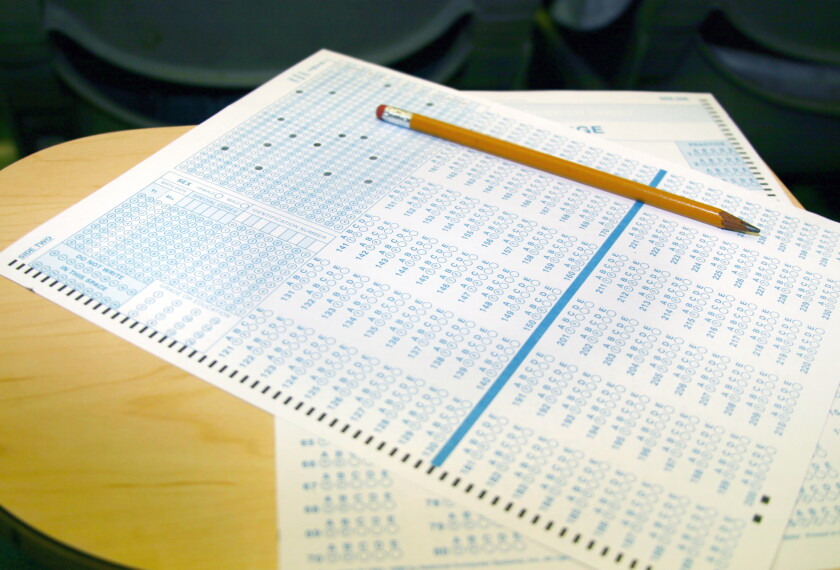
Forty-nine states and a number of urban districts have set standards for what students should know and be able to do at various points in their school careers. Half the states hold schools accountable and apply sanctions to those whose students fail to meet the standards. At least a third--with more soon to follow--require students to score at designated levels on tests to get promoted and/or graduate.
This fall, for example, Boston adopted a new student-promotion policy designed to end social promotion. The policy spells out in detail “what courses students must take, what projects and papers they must complete, and what tests they must pass in order to be promoted or to graduate.” The requirements are formidable even for kids who can read. New York state has toughened its already tough regents’ exam, and students must pass it to get a diploma.
So what’s wrong with raising standards? Isn’t that what policymakers and the public have been clamoring for?
How will parents and the public react when public schools fail large numbers of students and deny seniors graduation on the basis of a test score?
The problem is that an immediate and across-the-board implementation of new high standards and high-stakes exams ignores reality. A great many high school and middle school students, especially in urban districts, cannot read well enough to pass these tougher courses and tests. Nationally, more than half our urban 4th graders score below “basic” on national reading exams, which means they will have trouble doing grade-level work as they enter middle school. In Maryland, New Jersey, and Louisiana, more than 70 percent of the urban 4th graders are reading below basic. These children tend to fall steadily behind; many eventually drop out. Of those who stay the course and graduate, a significant number cannot succeed in college or a job without remediation.
Some say proficiency levels are too high on the National Assessment of Educational Progress. But even on exams like the Iowa Tests of Basic Skills and the Stanford Achievement Test-9th Edition, which many big-city districts rely on, as many as half of urban students are reading below grade level. In three out of four Chicago schools, at least half the students read below grade level. In Boston, nearly 40 percent of 11th graders score below basic in reading on the Stanford-9, and 75 percent score below basic in math. In Philadelphia, 65 percent are below the basic level in reading and 85 percent below basic in math. The story is the same in virtually every major urban district.
For tens of thousands of urban youngsters, it’s a kind of double jeopardy: The system failed to educate them adequately, and now it punishes them for not being educated.
These kids have not been exposed to the high standards, highly trained teachers, and rich curriculum that the standards-based reform promises--and must deliver if it is to succeed. Some states are determined to hold students accountable even though most teachers haven’t been prepared to teach to high standards and won’t be for years to come. The standards themselves are still in the “beta” phase in many states and districts, and their authors don’t yet know whether they are too rigorous or rigorous enough, too general or too specific. The states and districts are producing vastly different standards, assessments, and accountability systems, which can only cause problems for the many families who move across state lines.
States and districts should indeed set clear and rigorous standards. And they should hold schools and the adults in them accountable for educating their students to meet these standards. But until the schools demonstrate the capacity to provide an adequate education, high-stakes consequences for students, at least in big cities, are unjust. When schools can teach the great majority of children to read successfully by the 4th grade, then we can hold those 4th graders accountable for meeting high academic standards as they move through middle school and high school.
Until then, the highest priority for urban middle school and high school students is to teach them to read and write. They should continue to have access to courses in history, math, literature, and the arts, but the intense and persistent focus should be on reading. Getting most high school students to read at or above grade level is in itself an enormous challenge. America’s public schools don’t really teach reading after elementary school; teachers in middle schools and high schools don’t know how to teach adolescents to read.
I can hear it now: “You want to water down standards for poor kids, immigrants, African-Americans, and Hispanics.”
No! I want to use the last chance we may have to give them the tools they will need--reading and writing--to continue their educations. If that at least can be accomplished, there is hope that they may eventually get the education the system failed to provide them.
The late Albert Shanker, the longtime president of the American Federation of Teachers, foresaw this potential crisis. He was an ardent supporter of standards, but he often wondered aloud whether it was realistic to hold all youngsters to a single standard. He used to ask: How will parents and the public react when public schools fail large numbers of students and deny seniors graduation on the basis of a test score?
If high stakes are attached and enforced prematurely, failing students will pile up at the exits like steam building in a boiler. In the face of such pressure, the public education system will surely compromise, perhaps by lowering standards or the cutoff scores for passing. As a result, standards-based reform will suffer a serious setback and loss of credibility.