I support the school choice movement, but I do not trust it.
I do not trust school choice in the same way that I do not trust religious freedom, freedom of speech, freedom of the press, or really any freedom at all, for that matter.
Let me be clear. These freedoms are glorious. They are essential. And they are the rightful pillars our country was founded upon. But they are not ends in and of themselves. As soon as they are treated as ends, they cause us to lose sight of the very thing they intend to cultivate: the opportunity for individuals to act virtuously and responsibly.

School choice is just this kind of freedom. It provides schools with the liberty to recast the educational vision for this country and escape from the constraints placed upon them by state accountability systems and acronymic boards whose concerns are often far from the classroom.
It opens up the possibility for school leaders to break away from the mound of paperwork and get back into the business of developing school culture and training teachers. And it presents the opportunity for parents to return to the foreground in their children’s education instead of being limited by a selection of schools that has become increasingly monochromatic.
But none of these things is good in isolation; each one merely provides the chance for a new pedagogical vision. This new vision of education requires the training and hiring of teachers and administrators who are passionate about their subjects, who care deeply about their students’ well-being, and who can model a life of virtue, excellence, and scholarship. It requires the selection of curricula that present challenging and meaningful content across all subjects. It requires the establishment of a school culture that goes beyond the “do no harm” mentality that has swept through many of our schools. Instead, we must actually train students in civic virtue, prudence, leadership, and hope. It requires an intentional partnership between schools and parents to unify the lessons learned at school with the lessons learned at home.
We must fight so that we can fill the void left by state standards and bureaucratic red tape with a proper vision for what education ought to be."
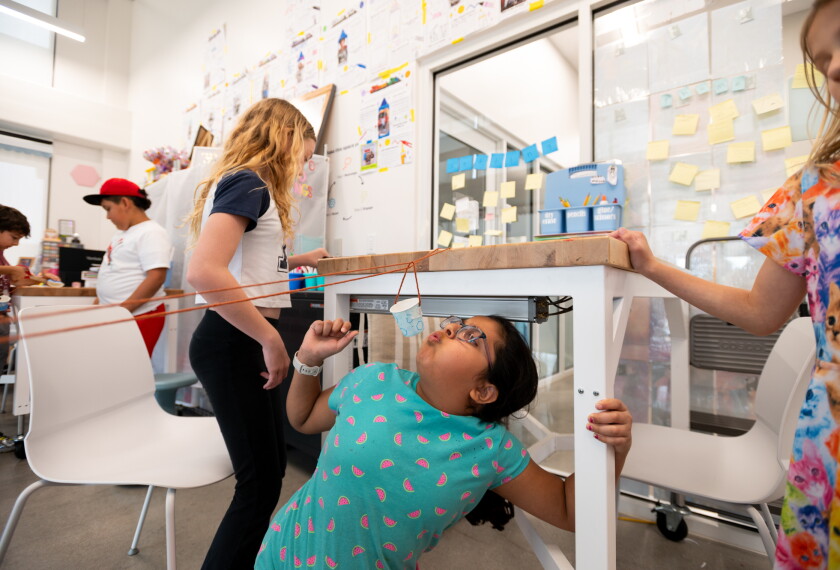
Most of all, it requires dynamic instruction that does not just present a set of facts and formulas but challenges students to discover those facts and formulas for themselves. Students must be able to make connections between these facts and figures and analyze their motives, implications, foundational principles, and applications to their lives.
Perhaps the best articulation of the nature of educational freedom comes from a 1925 lecture delivered by Jewish philosopher Martin Buber at an educational conference in Heidelberg. On a negative pole, Buber placed educational compulsion, but instead of placing freedom at the other pole, Buber places it in the middle, an escape from compulsion, but not itself a positive vision. In Buber’s words, freedom is a “foot-bridge, not a dwelling-place.” It is a necessary step in the progression away from compulsion, but not enough to fill the resulting void. “It is the run before the jump,” he declared, “the tuning of the violin.”
These words ring particularly true during National School Choice Week. All of us who already embrace school choice—and all those who might one day join us—are right to fight for educational freedom, but we must fight so that we can fill the void left by state standards and bureaucratic red tape with a proper vision for what education ought to be. School choice is that “tuning of the violin.” Violins must be tuned, but they are not meant merely to be tuned. They are meant to be played.
While we rightfully celebrate school choice this week, we must remember the true end of our efforts: a vision for curriculum and instruction that is oriented towards virtue and excellence. As we renew our commitment to the liberty of school choice, let us also renew our commitment to the responsibility that accompanies this liberty. For, as Buber rightly observes, “Life lived in freedom is personal responsibility, or it is a pathetic farce.”