Pa. Board OKs Certification Plan To Require New Teachers
To Earn Higher College GPAs
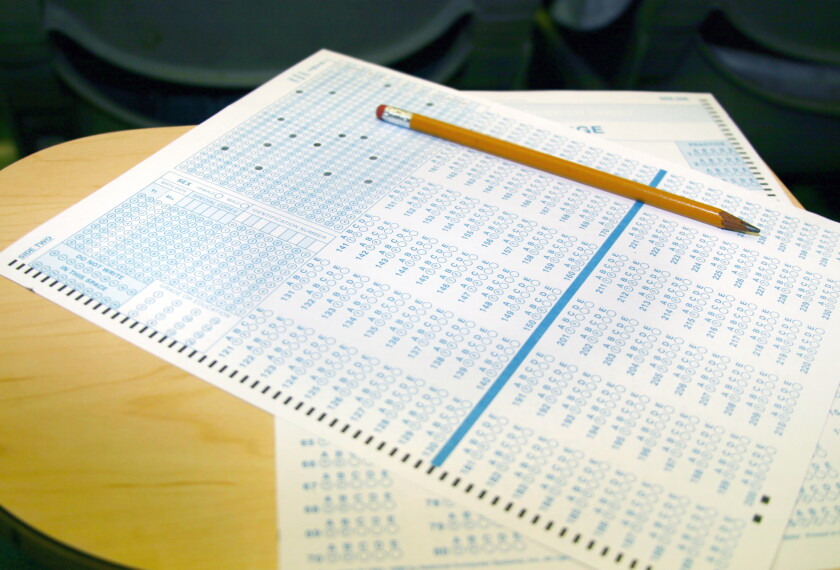
Most of Pennsylvania’s future teachers would have to earn higher grades in college and take more challenging courses, under rules passed this month by the board of education.
In a regulation that would be phased in over the next three years, aspiring teachers would have to maintain a 3.0 grade point average to enter and graduate from most teacher-preparation programs. The current GPA requirement for most Pennsylvania programs is 2.5.
|
Some exceptions would be allowed under the policy, which still requires formal approval by legislators and a state legal-review agency.
A grade point average of 2.8 would be allowed for students with combined SAT scores of 1050 or a high score on the state’s certification exam.
In addition, graduates from schools where 90 percent or more of students pass the state’s teacher- licensure test would be exempt from the state GPA requirement.
The policy would require prospective teachers to take the same core classes and electives in the subjects they wanted to teach as majors in those fields take. “Those who want to teach chemistry will have to take the same courses as a chemistry major,” said Gov. Tom Ridge, a Republican, who championed the more rigorous requirements.
The new rules are the final piece of Mr. Ridge’s 1997 Teachers for the 21st Century Initiative. Last year, he signed legislation that requires veteran teachers to receive ongoing training to stay certified.
—Robert C. Johnston
Bill Modifying Minn. Graduation Standards Approved
In the waning hours of Minnesota’s longest-ever legislative session, conservative lawmakers lost their battle last week to give school districts an alternative to the state’s 2- year-old high school graduation standards, which critics have called too top- down and fuzzy.
Rather than setting up a dual system—the solution proposed in an on-again, off-again compromise measure—the legislature merely gave districts more authority over the existing Profile of Learning requirements. (“Minnesota Weighs Profile of Learning’s Fate,” May 12, 1999.)

|
Under the bill, which Gov. Jesse Ventura is likely to sign, local educators would be able to reduce the required number of academic tasks that students must complete for graduation—a figure that currently stands at 24.
Another provision would allow districts to waive some requirements both for students who take rigorous courses, such as those that prepare them for Advanced Placement tests, and for this year’s freshmen and sophomores, the first classes expected to meet the new standards.
Some opponents of the Profile of Learning vowed to renew their fight for its repeal next year.
—Bess Keller
Drive To Ban Affirmative Action in Fla. Put on Hold
An effort to bar affirmative action in public schools, government contracts, and public-sector jobs in Florida has been put on hold until 2002.
The American Civil Rights Coalition, an advocacy group led by Ward Connerly, the California businessman who has been active in the fight against racial preferences, earlier this month shelved its campaign for a statewide vote on the measure.
Organizers realized there would not be enough time to collect the necessary signatures needed to place the measure on the Nov. 7 ballot, said coalition spokesman Kevin T. Nguyen. The coalition, based in Sacramento, Calif., was instrumental in winning passage of ballot measures prohibiting public policies based on race, ethnicity, or gender in both California and Washington state.
The proposed Florida initiative was sent for review to the state supreme court last fall, a routine step for such efforts, and has been tied up in the system ever since, Mr. Nguyen said.
Even if the court approved the measure, “it would still be impossible” to get the needed signatures before the state’s Aug. 8 deadline, he said.
—Julie Blair