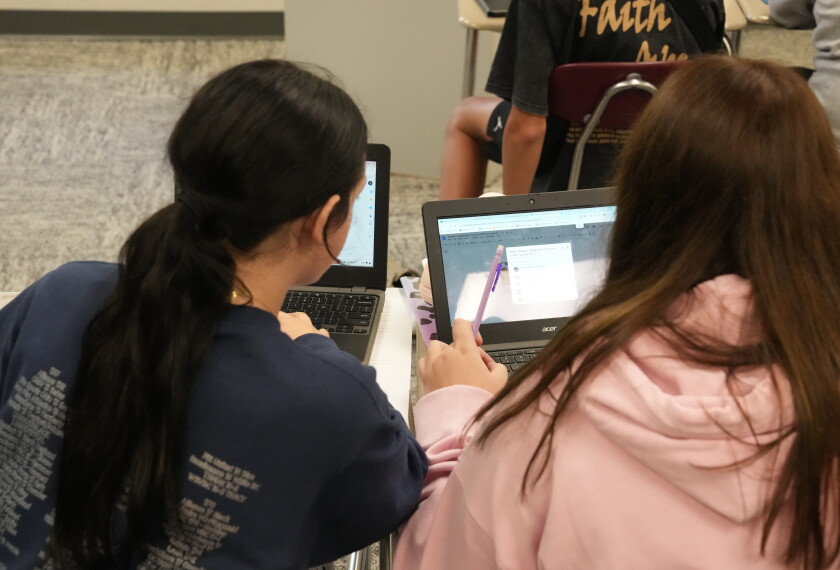
In attempting to bring “MOOCs” to the world of teacher training, the Silicon Valley company Coursera and its partners at universities and other institutions are courting a new and potentially vast audience, one that is becoming increasingly accustomed to receiving professional training via the Web.
The decision marks the first time that Coursera—a major provider of “massively open online courses"—has moved into K-12 education. Until now, the company has provided free content in higher education, a landscape also served by providers such as edX and Udacity.
So far, seven universities have agreed to provide free online coursework through the venture, along with five other institutions that provide educational content. The courses will not be offered for credit, but rather as content that can meet teachers’ requirements to obtain ongoing professional development through continuing education units, Andrew Ng, the co-founder of Coursera, told Education Week.
Twenty-eight free online courses are being provided initially through the program. The topics range from direct academic content on such topics as evolutionary biology and literacy to broader pedagogical lessons, such as how to structure discussions to promote learning and how to survive the first year of teaching.
Teacher colleges and other institutions are partnering with Coursera to provide free online professional-development through courses covering a range of academic subjects and teacher skills.
First Year Teaching—Success From the Start
Provider: New Teacher Center
Provides strategies for teachers to engage students, set behavior guidelines, and use instructional time wisely, among other goals.
Genetics and Society: A Course for Educators
Provider: American Museum of Natural History
Explores the ways in which genetics has affected society, and the various ethical, legal, and social issues surrounding modern-day genetics.
Student Thinking at the Core
Provider: Vanderbilt University, Peabody College of Education and Human Development
Examines how teachers can use the ideas, perceptions, and misconceptions that students bring to the classroom to improve student learning.
Teaching Character and Creating Positive Classrooms
Provider: Relay Graduate School of Education
Focuses on the connections among character development, education, and academic grwoth, drawing from research in neuroscience and other areas.
SOURCE: Coursera
While the primary audience for those courses is practicing teachers, including those in foreign countries, who are trying to improve their skills, Mr. Ng predicts the online courses will appeal to others, including parents curious about the instruction their children are receiving and online visitors who are considering a teaching career and who want to understand its demands.
“There’s a huge need out there” for high-quality professional development, Mr. Ng said. And “for someone trying to see if [teaching] is their profession, this would give them an entrée into what the profession looks like.”
Tapping Resources
Teachers and aspiring teachers are already tapping online resources for professional training, evidence suggests. Seventy-four percent of teacher colleges offered some kind of online for-credit courses as of the 2009-10 school year, a survey released this year by the American Association of Colleges for Teacher Education found.
And the number of teachers using online professional-development resources, including social networks, webinars, and professional learning communities, has risen over the past few years, according to nationwide survey results published in April by Project Tomorrow, an Irvine, Calif.-based nonprofit. Forty-one percent of the teachers surveyed reported having taken at least one online class, up from 33 percent in 2008, according to the organization, which seeks to promote the innovative use of math and science resources in schools.
The higher education institutions partnering with Coursera are the University of California, Irvine; Johns Hopkins University’s school of education; Match Education’s Sposato Graduate School of Education, in Boston; the Relay Graduate School of Education, in New York City; Vanderbilt University’s Peabody College of Education and Human Development; the University of Virginia’s Curry School of Education; and the University of Washington’s college of education.
Sustainable Model?
In addition, five museums and other institutions will provide course content: the American Museum of Natural History and the Museum of Modern Art, both in New York City; the Commonwealth Education Trust, a British organization focused on improving education and teacher training; the Exploratorium, a museum in San Francisco; and the New Teacher Center, a Santa Cruz, Calif.-based group that focuses on improving teacher skills.
Coursera forged agreements with the universities and other institutions after researching institutions the company believed were taking innovative approaches to teacher training, Mr. Ng said.
“We heard a fairly consistent [list of] organizations,” he said. Other universities and institutions could join the venture, he said.
One of the biggest questions surrounding MOOCs is whether they can continue to operate with their existing business model, in which content and services are for the most part given away for free.
Founded in 2011, Coursera has received substantial funding from investors—the company announced last year having received $16 million in venture capital, for instance—and it now offers 280 courses and boasts 3 million registered users. The company says it has begun exploring sources of revenue, including fees and career services for students.
Mr. Ng said the new arrangement for teacher professional development will follow the same free model his company has used so far. The only cost to users will conceivably be a fee they are charged if they want a certificate stating they have completed a course. That revenue would be shared among Coursera and the institutions, he said. That arrangement would presumably require permission of the institutions. As of last week, one partner institution told Education Week it had no plans to accept revenues from fees.
The new Coursera arrangement leaves unanswered many of the pre-existing questions about the financial viability of MOOCs, said Joe Doiron, a senior analyst at Eduventures, a Boston-based research and data company.
“Free is not sustainable,” Mr. Doiron said. “Universities are spending money to create these courses.”
Even so, Coursera’s arrangement with higher education institutions brings potentially significant benefits to the participating schools of education, he said. The market for professional development is balkanized, with states and districts placing very different demands on teachers, and universities with extensive experience in teacher training often struggle to break into those markets, Mr. Doiron said. The Coursera partnership offers the potential to reach large numbers of individual teachers at once, Mr. Doiron said.
But Coursera’s professional-development strategy, while offering flexibility to teachers and other online users, is somewhat “scattershot,” he said, and might not be as effective as teacher-training programs that build skills in a more systematic way. At the same time, Mr. Doiron credited the company for having “engaged schools of education, rather than bypassing them,” in providing content.
Leveling the Playing Field?
Robert Pianta, the dean of the Curry school at the University of Virginia, said his institution does not expect to receive any revenue from the Coursera arrangement through fees or other means. The school is offering an online course through Coursera to help educators understand how effective teacher-child interactions boost early-childhood development.
“This is an opportunity for us to innovate,” Mr. Pianta said. “It’s a good idea for us to be experimenting in this way. ...We think it’s going to help us go out there to a much broader audience.”
Sharon Robinson, the president of the American Association of Colleges for Teacher Education, said the Coursera venture reflected the increasing demand for timely, flexible course offerings. She said she did not regard it as a threat to the institutions AACTE represents.
“This would help us bring some really important content to a wider group of users than would be possible otherwise,” Ms. Robinson said. “It levels the playing field.”
Schools of education should not be “turning away from an obvious path because it challenges their business model,” she added.
The content of the Coursera courses, and how well the online program works overall, will be closely scrutinized by educators and policymakers, she predicted.
And the online forum is relatively transparent, she said. If teachers believe the courses are beneficial, the venture will grow; if they see little value, it will not, she said.
“This is not going to operate in a black box,” Ms. Robinson said.