One of Aesop’s fables, “The Goose That Laid the Golden Eggs,” is the story of a couple whose desire for instant gratification deprived them of sustained riches. A husband and wife were so fixated on the golden eggs their goose laid every day that they decided to kill the bird. Anticipating great wealth, they cut it open, only to find flesh instead of gold. The moral of this story, of course, is that sometimes we make decisions that are shortsighted and result in intense losses.
Today’s schools and educators are facing enormous pressures to achieve. The stakes are high. Many of the jobs current elementary students will fill as adults do not yet exist or will be completely re-envisioned by the time they enter the workforce.
Ironically, in an effort to prepare our students for these future challenges, schools have made decisions that may weaken our children’s social, emotional, intellectual, and physical health, while crippling their ability to think creatively, gain self-confidence, and work collaboratively.
The decision to limit or eliminate the unstructured play afforded by a recess period may detract from students’ ability to focus on the very subjects we use to measure success.”
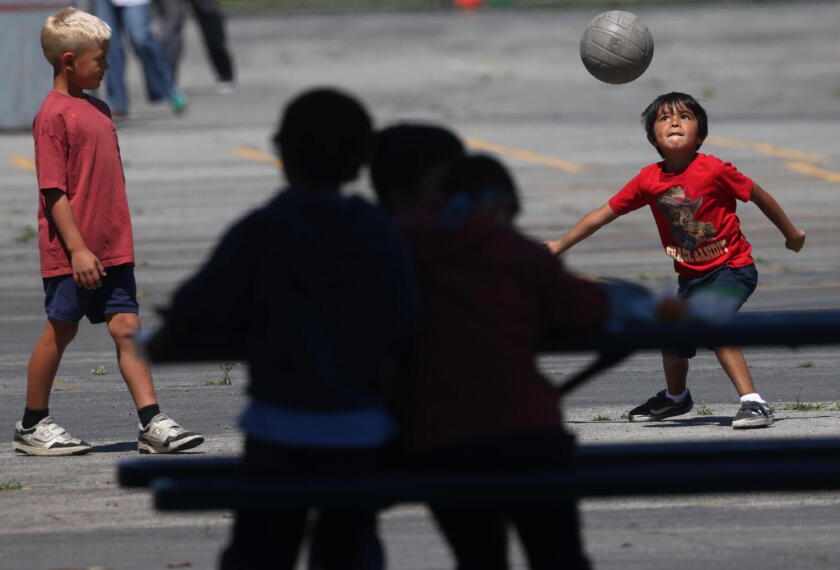
Recess is a valuable component of a child’s time in school, a time when students can collect themselves, recharge their batteries, and challenge themselves in a different setting. And yet, recess is too often excised from the curriculum as unnecessary; that decision, like the one to kill the goose that laid the golden eggs, is shortsighted.
As of 2009, 30 percent of the nation’s elementary schools had done away with recess altogether. Of those that maintained recess, 40 percent had cut it back significantly. If current trends continue, recess may soon be a thing of the past for our students.
In the wake of the federal No Child Left Behind and Race to the Top policies, schools across the country have been scrambling to improve math and reading scores, beginning with students as early as kindergarten. This laudable goal may come at the expense of activities that help children to be productive learners during the school day.
More than ever, students must learn to self-direct, negotiate, invent, compromise, and take responsibility for their own actions. The decision to limit or eliminate the unstructured play afforded by a recess period may detract from students’ ability to focus on the very subjects we use to measure success. Several thoughtful researchers have proved that creative thought, which is a large part of recess and play, can be viewed as an important aspect of problem-solving.
Why is unstructured play critical to student achievement? The answer lies, in part, in the way the brain processes information during a typical school day.
Directed or voluntary attention is the ability to focus, which allows a person to concentrate on work, reading, and tests. This limited resource can be depleted by long hours in a classroom or in front of a computer.
Involuntary attention, on the other hand, is the mind’s reaction to sudden changes in the environment and provides a respite from the intensity of directed attention. Natural outdoor settings often trigger involuntary attention, as we react to sounds, smells, and sights. It can also be stimulated by the unstructured and unpredictable nature of play.
Just as most adults require short breaks in the workday to maintain peak productivity, many recent studies demonstrate that daily recess for elementary school students can improve student focus and behavior, socialization, and school climate throughout the day.
With resources stretched to the limit, schools must look to the communities they serve for support in making quality play spaces and recess supervision possible. This commitment should be supported by state education policies that define recess as an essential element of the elementary school curriculum.
Community engagement, shared responsibility, and political will are required to preserve recess for future generations of students. The opportunity to coalesce around the simple fact that children benefit from playing represents a pathway for communities to build bridges across political, socioeconomic, and professional divides. A failure to do so will represent yet another shortsighted attempt to achieve a goal that requires patience, understanding, and awareness of how the developing child acquires knowledge.