
Rural communities are essential to the nation’s social, economic, and scientific future. Yet when it comes to STEM education and workforce development, these communities are often underserved, overlooked, and left out of the conversation entirely.
A new report from the National Academies of Sciences, Engineering, and Medicine, K–12 STEM Education and Workforce Development in Rural Areas, takes a close look at why that gap exists and what can be done to close it. The study offers a set of clear recommendations for improving access, coordination, and support.
The key message is straightforward: rural communities already have the ingredients for strong, engaging STEM education. What’s needed now is a more intentional effort to remove barriers, invest in infrastructure, and build on local strengths.
Rural Definitions Drive Access
There is no single definition of “rural” used across federal agencies or STEM education programs. This variation makes it harder to identify which communities are being served and which are being left out. In some cases, schools that face the same structural challenges as more remote districts are excluded from funding opportunities because they don’t meet a particular classification.
The report recommends developing a more flexible, shared definition of rurality. A multidimensional approach would help better track needs, align programs, and ensure that schools are not excluded from support due to arbitrary thresholds.
Place-Based Strengths
Rural communities often offer rich environments for STEM learning — environments shaped by local industries, natural systems, and cultural knowledge. From land management and water systems to agriculture and equipment maintenance, many students encounter STEM-related problem-solving in their daily lives.
Yet this kind of learning is rarely recognized in formal education settings. The report calls for more widespread use of place-based instruction that draws on local assets. When students can connect STEM concepts to the world around them, learning becomes more meaningful and more likely to lead to continued engagement.

Barriers to Access and Opportunity
Despite the opportunities, rural students face persistent barriers to high-quality STEM education. These include:
- Workforce shortages, particularly in STEM teaching roles, which can result in unfilled positions or instruction by underqualified educators.
- Limited access to resources, such as laboratory equipment, broadband connectivity, and safe and adequate facilities.
- A lack of informal STEM learning opportunities, including libraries, museums, and afterschool programs that are often concentrated in urban areas.
- Funding constraints tied to low property wealth, small enrollment sizes, and program eligibility rules that unintentionally exclude rural schools.
The report points to scalable strategies for addressing these issues, including locally driven educator preparation pathways and efforts to increase administrative capacity in rural districts.
Aligning Federal Policy and Practice
Federal STEM education and workforce development programs are often shaped by policy frameworks that do not fully account for rural realities. The report calls for better coordination across agencies, more inclusive funding mechanisms, and greater involvement of rural representatives in policymaking processes.
By removing unnecessary administrative burdens, clarifying eligibility criteria, and ensuring equitable access to existing programs, federal action can help unlock opportunities for rural students and educators.
A Path Forward
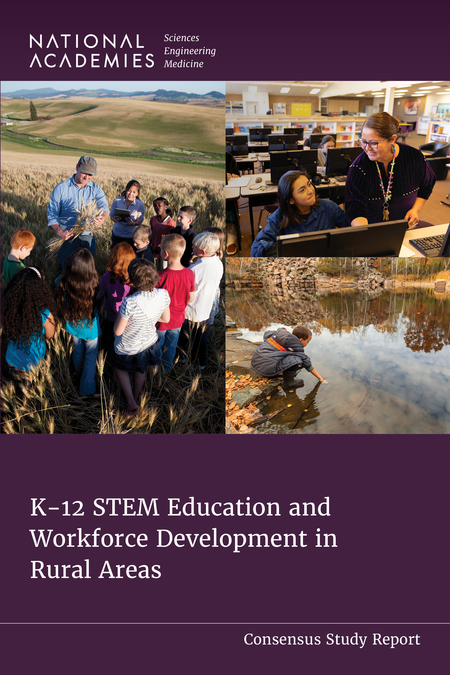
Investing in STEM education and workforce pathways in rural areas is not just about correcting disparities — it’s about recognizing and amplifying the talent, knowledge, and resilience already present in these communities. Rural students are future scientists, engineers, and innovators. Ensuring they have access to high-quality STEM education is a national imperative.
The report offers clear, evidence-based recommendations for making rural inclusion a central part of the nation’s STEM strategy and an opportunity for meaningful, lasting impact.