When President Bush first took office four years ago, he made expanding the role of faith-based groups in providing public services a federal priority. Now, it appears that the idea is getting more attention in state capitals as well.
At least 20 governors have contact persons or offices assigned to work with religious organizations and to help them gain better access to state and federal grants, including money for programs that serve schoolchildren.
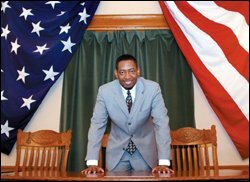
Some of the governors have set up faith-based offices at the request of the Bush administration, while other such offices date back to the Clinton administration.
The state offices provide a range of services. For example, some instruct religious groups in how to establish new nonprofit organizations that in turn may make it easier for them to receive government grants. Other offices give guidance on what faith-based groups can and cannot do with state or federal grants.
The state offices also differ in their relationships with the Bush administration.
Some focus on spreading the word about federal programs and have close ties with the White House Office of Faith-Based and Community Initiatives, which President Bush created by executive order in January 2001. Others emphasize state initiatives and have less White House contact.
It is perhaps little surprise that states are showing heightened interest in the idea of encouraging faith-based groups to provide public services.
The White House has been encouraging states and local governments to set up offices to work with religious groups, said John J. Porter, the director of the center for faith-based and community initiatives at the U.S. Department of Education. (“Faith Groups Express Belief In Federal Aid,” June 16, 2004.)
The Bush administration has done a “remarkable job” of making it easier for faith-based groups to receive federal grants and is “trying to get the states to make the regulatory changes to mirror what had happened at the federal level,” said R. Bryan Jackson, the director of communications for the Roundtable on Religion and Social Welfare Policy at the State University of New York in Albany.
Arizona Office
One state-level office that works closely with the White House and faith-based centers in federal agencies was set up just last month in Arizona by Gov. Janet Napolitano, a Democrat.
The White House’s office for faith-based initiatives sponsored a conference a year ago in Arizona. Gov. Napolitano planned a meeting to coincide with that conference that encouraged discussion between representatives of federal agencies, state agencies, and faith-based organizations.
Byron V. Garrett, the policy adviser on faith and community issues for Gov. Napolitano, said he views his job as getting a larger share of federal money for faith-based groups in Arizona.
He calculates that Arizona received about $11.5 million of the $1 billion of federal aid that went to faith-based groups in fiscal 2003, which he considers a small proportion.
Mr. Garrett noted that a lot of faith-based groups in Arizona provide mentoring or after-school activities for children and could possibly tap federal grants for those services. When it comes to state grants, he said, “Our state procurement code has always provided an opportunity for faith-based organizations to effectively compete for state dollars.”
By contrast, Oklahoma’s comparable office, which was created in July 2000, is less focused on helping religious organizations get federal grants. “My office is tasked with getting religious groups and our state agencies working together,” said Brad W. Yarbrough, the director of the office of faith-based and community initiatives for Oklahoma.
“At the state level, we are promoting collaborations,” he said. “The emphasis is meeting the needs of our fellow Oklahomans, whether or not there is a federal or state grant available.”
But Mr. Yarbrough does spend some of his time informing faith-based groups that they are eligible to apply for federal grants.
For example, he said his office is trying to identify religious congregations willing to provide meals to students during the summer as part of the U.S. Department of Agriculture’s school lunch program.
Federal Liaison
In addition to setting up the White House Office of Faith-Based and Community Initiatives, the Bush administration has established such offices in eight federal government agencies and charged those offices with working with religious groups across the nation on applying for federal grants.
Mr. Porter, who heads the office at the Education Department, said he communicates regularly with the faith-based office at the White House and the state offices working with religious groups.
State-level representatives typically attend local workshops led by Mr. Porter for faith-based and community organizations about federal programs.
President Bush signed an executive order on Dec. 12, 2002, that helped level the playing field for faith-based groups in applying for federal grants. Since then, the federal education program attracting the most interest among faith-based groups is the opportunity to provide tutoring under Title I of the No Child Left Behind Act, Mr. Porter said.
Figures from December 2003 showed that 9 percent of 771 supplemental-services providers under Title I on state-approved lists were faith-based. Mr. Porter said such statistics for fiscal 2004, which ended this past September, weren’t yet available.
President Bush signaled continued interest in his faith-based initiative recently by promoting Jim Towey, the director of the White House office of faith-based initiatives, to the post of assistant to the president.
“As a person working in the federal government, I take it as a positive sign of the president’s interest in this,” said Mr. Porter. Mr. Towey will continue to oversee the office of faith-based initiatives, but will report directly to the president, Mr. Porter explained.
Getting Started
Some of the governors’ offices for faith-based and community initiatives haven’t gotten very far in engaging religious groups in education programs.
In Wyoming, for example, Andy Aldrich, the state’s assistant deputy for the office of faith-based initiatives and advocacy, said he couldn’t give an example of a faith-based group that was actively involved in a program serving schoolchildren.
But he said he has invited religious leaders to various meetings in which his office informed people about opportunities to get involved in school lunch programs, poverty initiatives, or the provision of “wrap-around services” to children through schools.


