
Brussels, Wis.
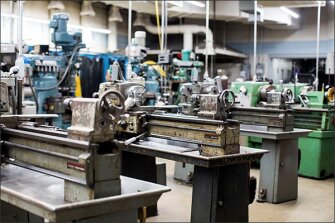
Last fall, Wisconsin’s Republican Gov. Scott Walker used Southern Door High School’s newly installed 3D printing lab in this small town near Green Bay as a backdrop to propose a $639 million increase in public school funding.
“We know that ensuring our students’ success, both in and outside the classroom, is critical to the state’s continued economic success,” said Walker, now in a fierce campaign for a third term against long-time state schools chief Tony Evers.
The Southern Door County schools, administrators say, got almost none of that money. In fact, the 1,029-student district—rural, losing students, and hampered by tax revenue caps put in place more than 20 years ago—had to make severe budget cuts this year and pull an extra $200,000 out of its savings account. If a referendum on the county ballot this fall allowing the district to exceed its revenue cap fails to pass, there will likely be more cuts next fiscal year.
The intricacies of Wisconsin’s school spending and whether districts like Southern Door need more or less money from the state has come to dominate the gubernatorial contest between Walker and Evers, both of whom have made their education records a high-profile piece of their pitch to Wisconsin voters in the November election.
Walker says that by leading the charge to turn Wisconsin into a right-to-work state with the passage of legislation in 2011 that stripped the bargaining rights of public employee unions including teachers, he’s saved the state more than $3.5 billion, while keeping property taxes low and expanding school choice. He has claimed his most recent budget provided districts with $200 more per student, though many dispute that fact.
Under Walker between 2011 and 2013, the state cut education funding by some $800 million, hitting some districts harder than others. Spending has rebounded since then, but Walker’s critics say it hasn’t been enough to keep up with inflation.
Evers says Walker’s budget cuts over the years crippled school districts’ ability to provide students with basic resources, causing massive layoffs and a teacher shortage across the state. He has proposed to boost spending by more than $1.7 billion.
Walkers’ and Evers’ claims, pumped out on social media, through TV ads, and at campaign rallies, have caused angst for the district administrators who will have to find ways to cope with whatever decisions are made in Madison next year.
“With all this political rhetoric, the true test is what whoever is selected does when they get in office,” said Steve Bousley, principal of Southern Door High who, because of budget cuts, last year served double duty as principal of both the middle and high schools. “Will they keep students first then?”
Heated Campaign
The race in recent weeks has turned especially combative.
Walker has accused Evers in a series of ads of mishandling the department of education as state superintendent. Walker also has said Evers has failed to pull the licenses of teachers accused of sexually assaulting and body slamming students. (Evers calls the accusations misleading and desperate, saying he didn’t have authority at the time to pull the licenses, something that’s since been changed in state law.)
Walker also says that under Evers’ watch, the academic performance of the state’s students, especially its poor, Latino, and black students, has lagged. Wisconsin has one of the nation’s widest gaps between the academic performance and graduation rates of white students and students of color.
In contrast, Walker portrays himself as the state’s “education governor,” highlighting a variety of actions he took over the past eight years.

“We’ve not only made the largest historic investments in state history, which is important, but because of Act 10—because of our reforms—those dollars are overwhelmingly going into the classroom where they have a real impact on student success,” Walker said, referring to the 2011 legislation barring public unions from bargaining over wages and working conditions. His comments came in an interview with Education Week correspondent Lisa Stark.
Evers has called Walker’s television ads attempts to salvage his re-election campaign. Academic performance for all students will improve, he says, once they get more money from the state.
“Divisive solutions from Washington and Madison haven’t made things better,” Evers said during a rousing speech to teachers and local superintendents in the rotunda of the State Capitol last Thursday. “Public education will only remain the great equalizer only as long as we remain committed to it.”
In his two-year spending proposal released this month as state chief, Evers calls for increasing state K-12 funding by 10 percent, and to allow districts to annually collect from state and local taxpayers enough money to keep up with the inflation rate. He has not yet said how he will pay for the increase over the next two years, though he’s promised not to raise taxes.
Walker, in his proposed budget, touted the state’s low unemployment rate and promised to make even more tax cuts, including one that would lower the property tax bills of senior citizens in the state.
Legacy of Act 10
The 2011 passage of Act 10 continues to cast a long shadow in Wisconsin. Walker made national headlines in pushing through the legislation in the face of widespread protests from teachers and other public service workers. The law survived several legal challenges, and Walker survived a recall effort prompted by it.
In response to the law’s passage, districts like Southern Door made changes to their healthcare and pension plans and outsourced several services. They also began sharing nurses and psychologists with neighboring districts and local community colleges.
Separately, many districts, especially since the recession, have been going to local voters in referendums to shore up their budgets. This fall, 82 districts will have referendums to increase their spending.
Southern Door sits on a strip of land that juts out into Lake Michigan, and the community is lined with lakefront homes. The state’s funding formula has labeled the district “property rich” and, as the district has lost students, the state has required the district to become more and more reliant on local property taxes. The state provides the district $1 million a year in education funding, which is $2.6 million less than what it provided more than a decade ago when the district had 200 more students.
Of the four referendums Southern Door administrators have taken to voters since the passage of Act 10, one was approved and three failed. The most recent one, on the ballot this past spring, failed by 25 votes. The district is 29 students too big to qualify for state aid for rural districts. Southern Door now spends on average $9,195 per student, about $200 less per student than the average district in the state.
Messaging to Voters
With all the political messaging about the state’s budget and the financial health of schools, Mark Logan, Southern Door’s business manager, has found it more and more difficult to explain to the average voter why the district is asking for another referendum.
“They’re telling me the governor said on television that he’s given more money to rural schools and we have to explain how we don’t qualify as a rural school district,” Logan said.
District officials have passed out flyers, made visits to the local Lions Club, and driven a karaoke bus around town to build community support.
“We don’t know who’s going to get elected and, based on that, how much money we’re going to get next year,” said Patricia Vickman, the district’s superintendent. “We’re used to challenges. We have faith that, together, as a school, we’ll rise above it and do what it takes to provide the best education possible.”


